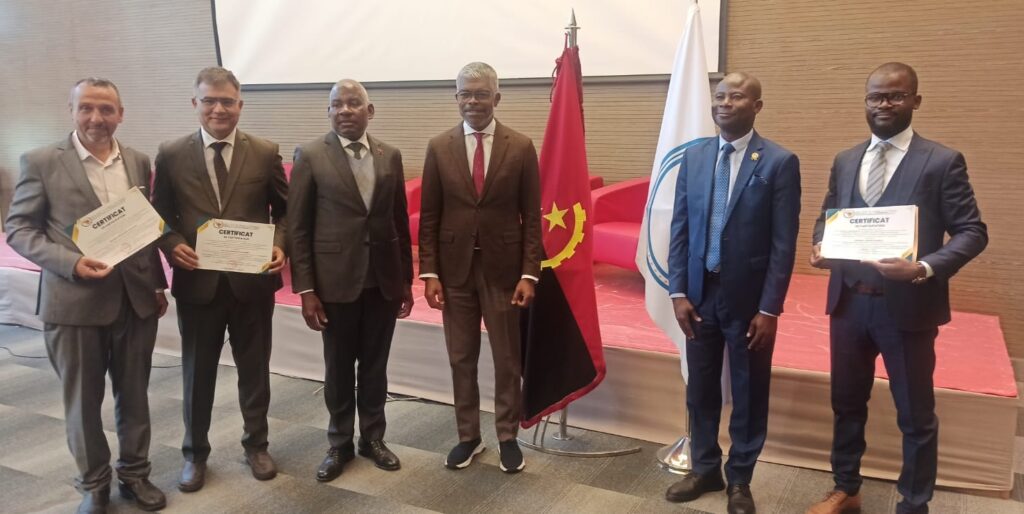
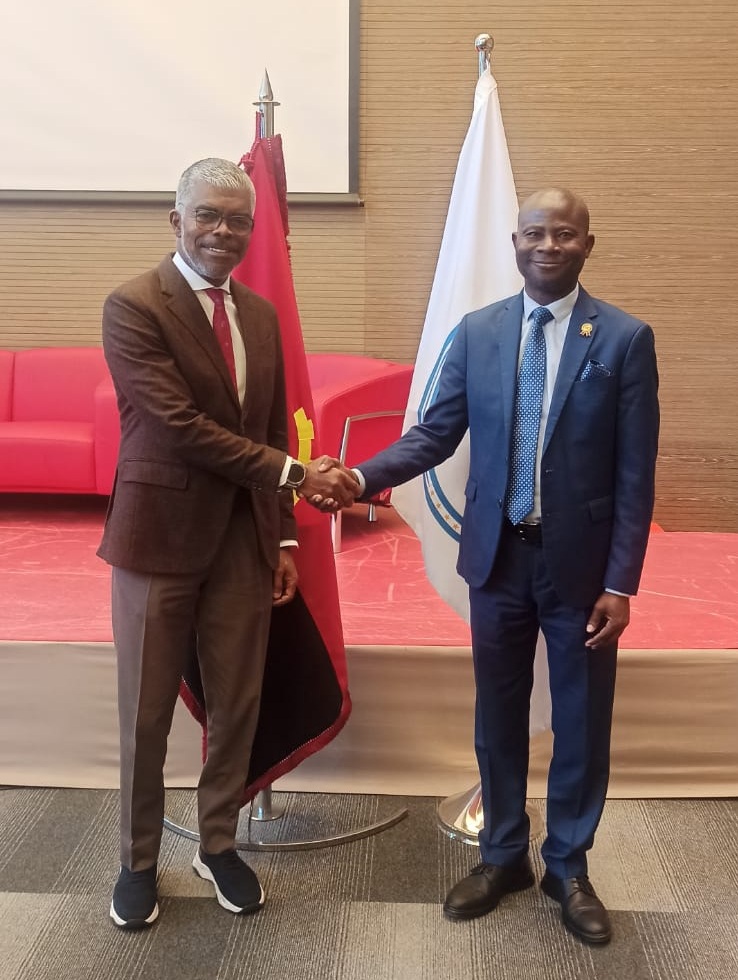
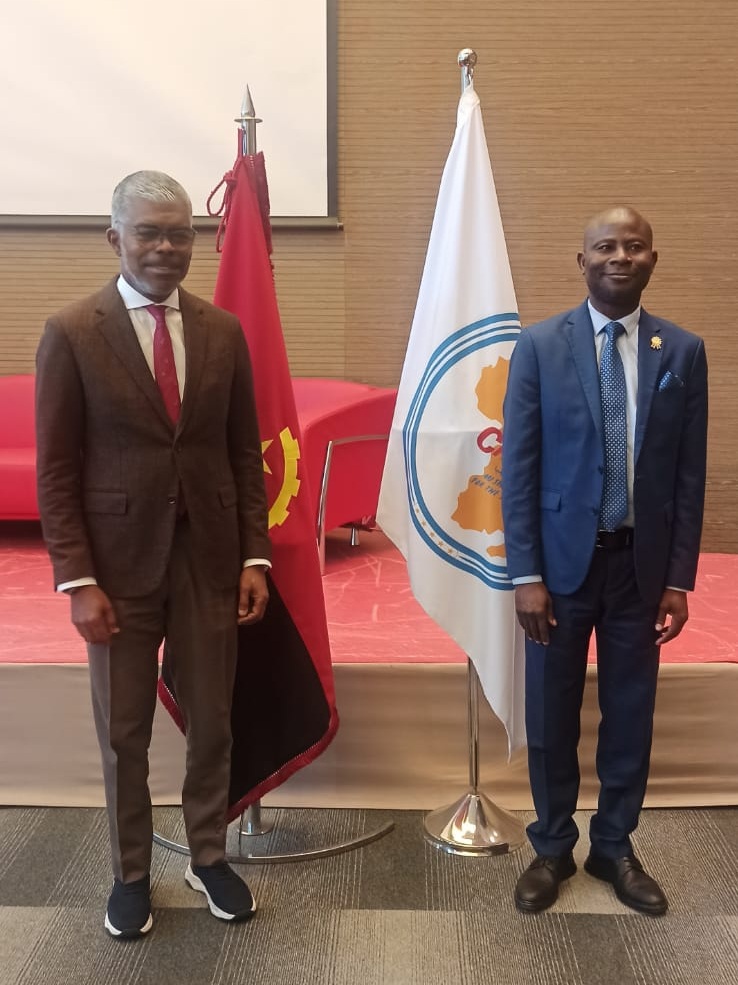
CAFRAD and the Republic of Angola Strengthen South-South Cooperation
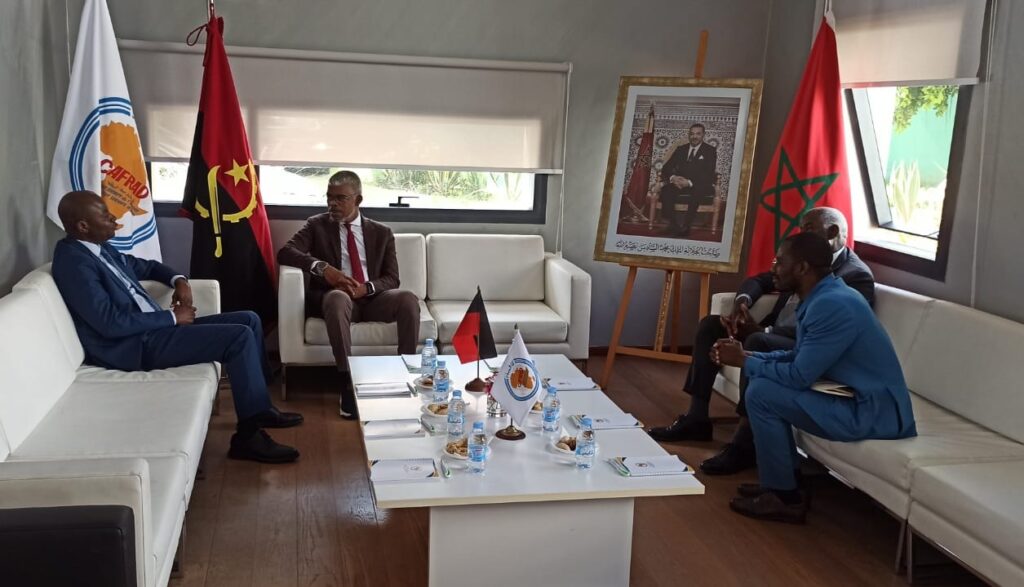
The African Training and Research Centre in Administration for Development (CAFRAD) hosted a high-level delegation from the Ministry of Transport of the Republic of Angola, led by His Excellency Mr. Ricardo Viegas d’Abreu, Minister of Transport, at its headquarters in Rabat on Friday, April 17. This high-level visit is part of a strategic approach to strengthening South-South cooperation, a core priority for CAFRAD, which aims to promote African solutions to the continent’s structural challenges.
In a context marked by profound imbalances in global economic systems, CAFRAD positions itself as a catalyst for institutional transformation and the modernization of public policies in Africa. The meeting with the Angolan delegation illustrates the shared commitment to building sustainable partnerships focused on sharing expertise, transferring skills, and co-creating development models adapted to African realities and the digital age.
A Visit under the Sign of Strategic Partnership
Upon their arrival, the members of the delegation were received by the Director General of CAFRAD, Dr. Coffi Dieudonné Assouvi. In his welcoming address, the Director General expressed his deep gratitude to the Republic of Angola for its unwavering commitment and support for the Institution’s activities. He also acknowledged the presence of the Minister of Transport, emphasizing the importance of this visit for strengthening inter-African relations, particularly between CAFRAD and the Republic of Angola, and for consolidating a shared vision for the comprehensive and systemic transformation of Africa. The Director General took this opportunity to reiterate CAFRAD’s central role as a pan-African platform for strategic thinking, training, and support for African public administrations. He stressed that the Institution’s work is structured around key areas designed to address the continent’s contemporary challenges.
At the heart of this approach lies human mobility. It is considered a key driver of development, through optimized management of skills flows and better utilization of African human capital. CAFRAD works to promote the circulation of knowledge and expertise, while helping to mitigate the imbalances linked to the brain drain. The institution also places particular emphasis on applied research. This research is geared towards resolving concrete problems faced by African public administrations and aims to produce innovative, directly operational solutions adapted to local realities.
CAFRAD also intervenes in the field of public policy, supporting states in developing and implementing strategies aligned with the dynamics of economic transition and global changes. The objective is to strengthen the effectiveness of public action while anticipating future structural transformations. Finally, leadership training is a fundamental pillar of its work. Through its programs, CAFRAD aims to equip a new generation of African leaders, capable of meeting contemporary challenges with a strategic vision, innovative capacity, and a strong sense of governance.
Dr. Coffi Dieudonné Assouvi emphasized the need to integrate African public policies into a framework of innovation, resilience, and regional integration in order to effectively address contemporary challenges.
Geo-logistics at the heart of the bilateral discussion
At the center of the discussions was geo-logistics, a rapidly emerging strategic concept that goes beyond simple logistics to incorporate the geopolitical, economic, and territorial dimensions of supply chains. In an increasingly interconnected world, controlling the flow of goods, information, and resources is becoming a crucial lever for competitiveness and sovereignty for African states.
These discussions highlighted the need for a profound transition, moving from traditional international logistics, often fragmented and dependent on external systems, to integrated, intelligent, and resilient management of global supply chains. This transformation requires not only infrastructure investments but also institutional reform and skills development for both public and private stakeholders.
Thus, it is essential to highlight the importance of collaboration between public and private actors, as well as the central role of regional integration in creating value, reducing external dependencies, and strengthening the continent’s economic resilience. Furthermore, securing supply chains was identified as a priority, requiring the diversification of partnerships and the development of regional cooperation mechanisms. In addition, discussions underscored the complementarity between connectivity, which facilitates the smooth flow of goods and services on a global scale, and local integration, which aims to consolidate solid local economic foundations. The balance between these two dimensions appears essential for building sustainable, competitive, and resilient African development models.
A promising dynamic for the continent’s future
Through this meeting, CAFRAD and the Republic of Angola reaffirm their commitment to strengthened cooperation for a more integrated, innovative, and sovereign Africa. This visit marks an important step in strengthening relations between the two parties and paves the way for new avenues of cooperation and reciprocal exchanges. Beyond its bilateral nature, this initiative is part of a broader vision: that of a continent capable of taking control of its own destiny, drawing on its own resources, skills, and solidarity. By focusing on key sectors such as geologistics, CAFRAD confirms its role as a laboratory of ideas and actions serving the structural transformation of Africa.