


Accounting as a Strategic Vector for Transformation and a Driver of Sustainable Development in the Public Sector
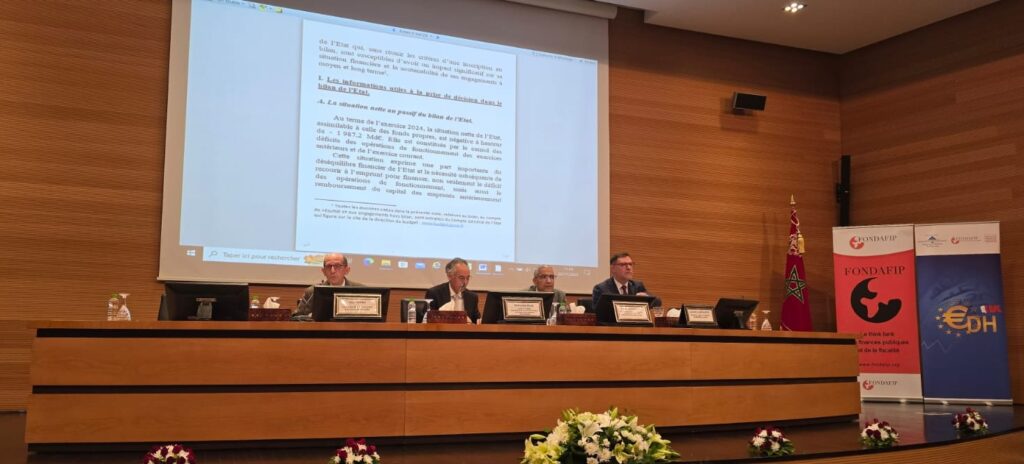
CAFRAD, represented by its Director General, Dr. Coffi Dieudonné ASSOUVI, and his team, honored the invitation of the General Treasury of the Kingdom by taking part in the panel conference held at its premises in Rabat on November 22, 2025, on the theme: “Role and Challenges of General Accounting in the Public Sector.”
This high-level meeting was structured around three main areas:
- The challenges related to accounting norms and standards, both at the international and national levels;
- The role of accounting in sustainable development, particularly in connection with new requirements for accountability and sustainability;
- The role of accounting in public decision-making, as a strategic tool for guiding and rationalizing State choices.
The conference brought together a panel of renowned experts and researchers from Morocco and France, who shared their analyses, best practices, and successful experiences in the accounting field. The objective was to demonstrate how accounting can become a genuine lever of governance, facilitating public decision-making and strengthening institutional performance.
Discussions focused in particular on the need to design a more inclusive public accounting model capable of integrating new imperatives, such as sustainability and the assessment of the impact of public policies. Accounting was thus presented as a central management instrument, linking the State to citizens as well as to financial partners, within a framework of transparency and trust.
The standardization of accounting standards was also addressed from a practical and operational perspective. Such harmonization is indeed a determining factor in ensuring the uniformity and readability of financial data, while enhancing the country’s attractiveness to funding partners.
Morocco is fully committed to this dynamic of modernization and financial governance. The reforms undertaken aim to consolidate public accounts, further professionalize accounting practices, and equip public institutions with modern tools that meet international standards.
Ultimately, the conference highlighted the strategic role of accounting in steering public action. Accountants are now positioning themselves as true partners of the government, carriers of best practices and full-fledged actors in the ongoing structural reforms, working toward more efficient, transparent, and sustainable public management.
At the conclusion of this important conference, participants put forward the following recommendations:
Strengthen the recognition of accrual (asset-based) accounting
Accrual accounting remains insufficiently highlighted within public-sector structures. There is a need to better recognize its strategic role in the valuation, preservation, and optimization of State assets.
Promote a positive image of accounting work
The work of accountants should be more strongly valued and viewed in a positive light. This involves highlighting their essential contribution to the reliability of financial information, the steering of public policies, and the modernization of public administration.
Accelerate the professionalization of the financial and accounting function
An upskilling effort is required within financial and accounting services. This entails strengthening initial and continuing training, developing specialized programs, and equipping accountants with the methodological and technical tools necessary to meet current standards.
Fully integrate artificial intelligence into management systems
Management systems must evolve to incorporate AI technologies in order to improve analysis, forecasting, internal control, and decision support. Strategic reflection is needed to anticipate the organizational, technical, and human impacts of this transformation.
Encourage automation and data reliability
The automation of information flows is a major lever for modernization. This involves promoting tools that reduce manual tasks, improve data quality, and ensure traceability, thereby contributing to faster, more coherent, and more reliable public management.