AI Made in Morocco: Artificial Intelligence at the Heart of Digital Transformation and Public Services The Director General of CAFRAD Participates in the Launch of the National Network of Centers of Excellence “Jazari Institutes”
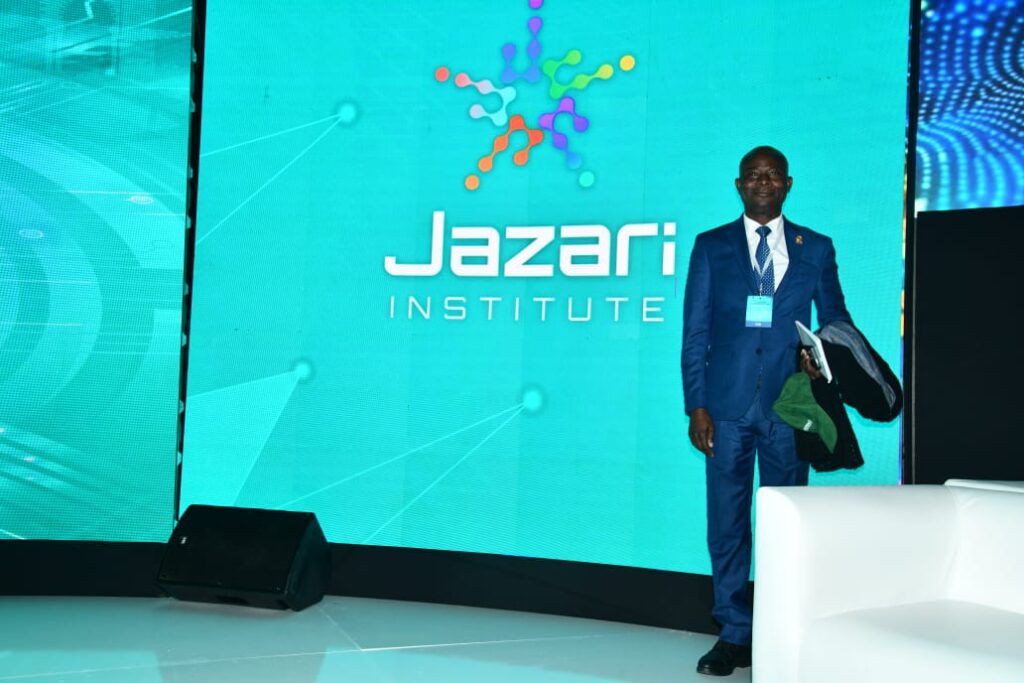
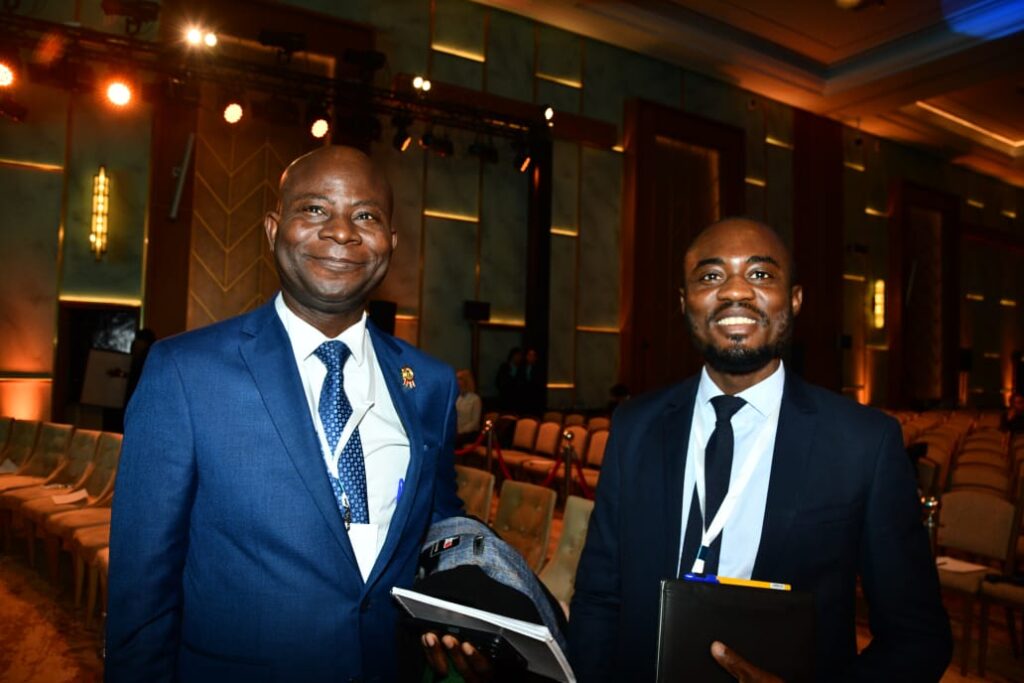
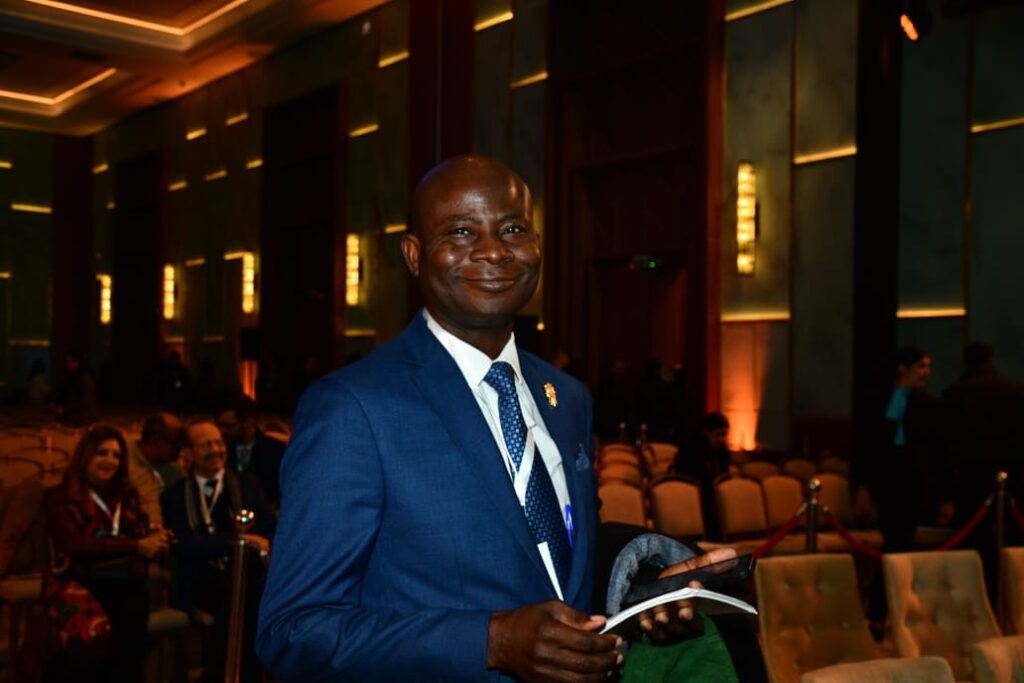
In response to the invitation of Her Excellency Professor Amal EL FALLAH SEGHROUCHNI, Minister Delegate to the Head of Government in charge of Digital Transition and Administrative Reform and Chair of the Board of Directors of CAFRAD, Dr. Coffi Dieudonné ASSOUVI, Director General of CAFRAD, took part on 12 January in Rabat in the national ceremony marking the launch of the National Network of Centers of Excellence “Jazari Institutes,” alongside a high-level delegation of Ministers of the Moroccan Government.
The participation of the Director General of CAFRAD reflects the political will of the highest authorities of the Kingdom of Morocco to involve the pan-African intergovernmental organization in national strategic reflections and to make it an active instrument for the dissemination of the Moroccan model of comprehensive transformation and South–South cooperation. In this way, CAFRAD positions itself as a catalyst of the Royal High Vision of South–South cooperation for the benefit of all African countries. The Organization promotes the initiatives of all its Member States within the framework of international cooperation, Afro-African and triangular cooperation, with the aim of becoming an accelerator of African solutions to African challenges.
According to Dr. Coffi Dieudonné ASSOUVI, Africa’s genuine development must be built upon the optimal mobilization of human intelligence, technologies, assets, knowledge, methods, and endogenous expertise, while drawing inspiration from international best practices (benchmarking) that can be adapted and contextualized to the African reality. Based on this premise, CAFRAD intends to contribute to the implementation of the Morocco Digital 2030 strategy and to the operationalization of the Digital for Sustainable Development (D4SD) Hub, signed by Morocco and the United Nations Development Programme (UNDP) in September 2025 on the sidelines of the United Nations General Assembly in New York.
New York, 26 September 2025 – On the sidelines of the 80th United Nations General Assembly (UNGA-80), the Kingdom of Morocco launched its new Digital Hub for Sustainable Development (D4SD). Implemented in partnership with the United Nations Development Programme (UNDP), this Hub aims to support countries in the Arab States region and Africa in leveraging digital public infrastructure, artificial intelligence (AI), and innovation, while strengthening regional and interregional cooperation to accelerate the achievement of the globally adopted Sustainable Development Goals (SDGs).
On 12 January in Rabat, the Kingdom of Morocco reached a major milestone in its digital trajectory during the high-level institutional event “AI Made in Morocco,” organized by the Ministry of Digital Transition and Administrative Reform. The event was chaired by Professor Amal EL FALLAH SEGHROUCHNI, Minister Delegate to the Head of Government in charge of Digital Transition and Administrative Reform and Chair of the Board of Directors of CAFRAD. It follows directly from the National Artificial Intelligence Conference held on 1–2 July 2025 in Rabat and marks a key moment of strategic clarification regarding the role of AI in the Kingdom’s economic, social, and institutional development.
The outcomes of the National Conference highlighted a shared assessment: artificial intelligence is neither neutral nor merely a technological tool, but rather a power factor that profoundly reshapes global economic, social, and geopolitical balances. In a global context of accelerated technological competition, remaining static represents a major risk of strategic marginalization. Moroccan governance illustrates African potential: drawing on its structural strengths—namely institutional stability, a youthful population, sustained reform momentum, and strong strategic and diplomatic leadership—the Kingdom has chosen to anticipate change and put forward a strategy built around five key challenges: digital sovereignty, citizens’ trust, skills development, endogenous innovation, and territorial inclusion.
The “Digital Morocco 2030” Roadmap: An Illustration of Morocco’s African Ambition
It is within this framework that the “Digital Morocco 2030” roadmap was designed, with its vision, strategic pillars, and structuring initiatives presented during the event. This roadmap seeks to place artificial intelligence at the core of the national digital strategy, with a clearly stated objective: to position Morocco as a continental hub of excellence in AI, attractive to young talent and international capital, while developing a sovereign artificial intelligence aligned with ethical values and national priorities. The roadmap positions AI as a lever for a competitive and diversified economy, an inclusive and solidaristic society, and a modern, efficient State that is responsive to citizens’ needs.
One of the major contributions of “AI Made in Morocco” lies in highlighting a central operational lever designed to translate this vision into concrete and measurable actions across the entire territory: the creation and deployment of the National Network of Centers of Excellence known as the “Jazari Institutes.” Conceived as an accelerator of the Morocco Digital 2030 strategy and named in homage to the polymath Al-Jazari, these institutes embody the Kingdom’s ambition to build a trusted technological future rooted in its scientific heritage and open to innovation. The official launch of “Jazari Root,” the federating core of the network, marks a decisive step in structuring this ecosystem by strengthening links between research and industry, supporting the growth of technology startups, fostering digital adoption by SMEs, and enhancing talent attraction and retention.
Regulating Artificial Intelligence: A Challenge of Responsible Governance
The event also placed strong emphasis on the governance and regulation of artificial intelligence. The presentation of the draft national regulatory framework, commonly referred to as Law X.0, highlighted Morocco’s determination to establish a legal foundation ensuring safe, ethical, and value-creating AI. This approach is based on a co-construction process involving key relevant institutions, particularly in the areas of personal data protection, cybersecurity, and digital sovereignty, in order to strike a coherent balance between innovation, the protection of fundamental rights, and security.
Artificial Intelligence as a Vector of South–South Cooperation
Institutional interventions also helped situate the “Morocco AI 2030” project within a broader geopolitical perspective. Artificial intelligence was presented as a lever of digital soft power and a vector of South–South cooperation, capable of strengthening the Kingdom’s international positioning while contributing to shared development, technological sovereignty, and Africa’s regional projection. This international dimension gives the Moroccan strategy a scope that goes beyond the national level, making AI a tool for cooperation, solidarity, and responsible influence.
By bringing together public institutions, the private sector, and academia around strategic exchanges, structuring presentations, and the formalization of concrete commitments, “AI Made in Morocco” established itself as a foundational moment in the governance of artificial intelligence in Morocco. The event confirmed the Kingdom’s determination not to undergo the AI revolution passively, but to master and steer it in the service of sustainable, inclusive, and sovereign development, making artificial intelligence a central pillar of digital transformation and the modernization of public services.
At the conclusion of this rich day, featuring four (4) panels, eight (8) partnership agreements were signed, including a partnership agreement with the French company Mistral AI aimed at supporting the development of generative AI tools in Morocco. Thus, Morocco, under the High Guidance of His Majesty King Mohammed VI, may God assist Him, is committed to being a shaper of global technological geopolitics, a pioneer of digital sovereignty, sovereign cloud infrastructures, data centers, and the development of African AI, while supporting all other African and Arab countries in this domain.
CAFRAD stands ready to play its role in this major milestone of Africa’s sovereign transformation—intellectual, technological, economic, and even political.