Anticipation in an Era of Volatility: Rethinking the Future of Public Policies and Administration at UNESCO

UNESCO Headquarters in Paris hosted the 2025 edition of the World Futures Day on 2 December, under the theme “Anticipation in an Era of Volatility.” This international event brought together public decision-makers, researchers, experts, and practitioners from around the world to explore how futures literacy, foresight, and anticipation can strengthen the capacity of societies and governments to cope with the profound transformations of our time.
In a context marked by rapid technological acceleration, demographic shifts, climate change, and geopolitical uncertainties, the World Futures Day positioned itself as a global space for strategic reflection. CAFRAD participated in this event as a pan-African think tank and a laboratory for innovative ideas, contributing to discussions on how to inform public action and steer policies toward more sustainable, inclusive, and resilient trajectories.
Anticipating to Act in an Uncertain World
The plenary session debates highlighted the growing importance of anticipation, imagination, and foresight thinking in response to the volatility of contemporary environments. Foresight tools have become essential foundations to help public institutions move beyond short-term reactive approaches and project themselves proactively into multiple, plausible, and desirable futures.
The 2025 edition stood out for its strong focus on the practical application of foresight in public policy design, drawing on interdisciplinary expertise, particularly that of UNESCO Chairs specializing in futures studies and anticipation.
Artificial Intelligence and the Future of Humanity: A Philosophical Warning
The keynote address was delivered by Mr. Éric Sadin, philosopher and specialist in digital technologies and artificial intelligence. His lecture, entitled “The Future of Humanity in the Age of Artificial Intelligence Omniscience,” provided a critical and thought-provoking framework for the entire event.
Sadin denounced the unchecked acceleration of technological development driven by the rise of generative artificial intelligence and warned against the risk of excessive delegation of human capacities to proliferating automated systems. He called for the adoption of a binding global charter to ensure that artificial intelligence remains truly ethical, responsible, and human-centered, emphasizing that these principles must go beyond mere declarations of intent.
Anticipatory Governance and Futures Literacy
Institutional interventions converged around a shared conclusion: the urgent need to strengthen collective capacities for anticipatory governance. UNESCO officials stressed the importance of long-term institutional preparedness, integrating research, trend analysis, and early risk identification into public planning processes.
Futures literacy was presented as a key 21st-century competence, accessible to all and essential for improving the quality of public decision-making. The images societies hold of the future profoundly shape present choices; therefore, developing hopeful future visions grounded in creativity and innovation emerges as a strategic lever for collective action.
Anticipating the Future of Public Administrations in the Age of AI
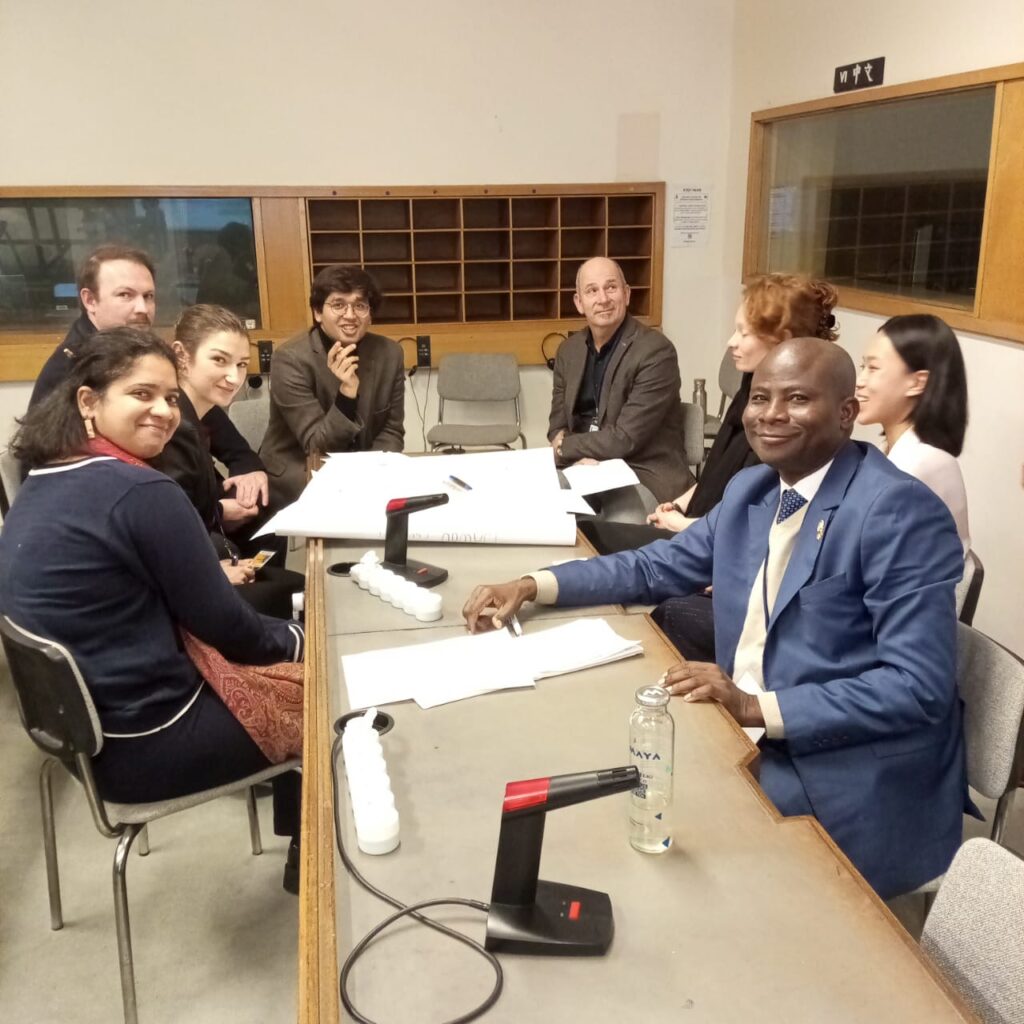
Alongside the plenary session, a dedicated workshop on anticipating the future of public administrations explored the transformations driven by artificial intelligence and digital transition. Discussions focused on the skills, behaviors, and institutional capacities required to shape a more effective, ethical, and human-centered public governance.
Several foresight scenarios were discussed, ranging from a digital administration centered on public values—promoting citizen participation and trust—to more technocratic models based on the large-scale algorithmization of decision-making, raising major concerns regarding freedoms, transparency, ethics, and accountability. Perspectives related to the emergence of agentic AI and the intensive digitization of public services also highlighted opportunities for improved performance, alongside risks of loss of meaning, digital divides, and social exclusion.
Skills, Values, and Challenges of Public Sector Transformation
The discussions underscored that the digital transformation of public administration cannot succeed without substantial investment in human skills development. Beyond technical expertise, administrations will need to strengthen soft skills such as critical thinking, empathy, emotional intelligence, AI ethics, anticipatory capacity, and digital leadership.
Challenges remain significant, particularly in developing countries: digital divides, insufficient infrastructure, weak institutional capacities, lack of technological sovereignty, organizational resistance, and inadequate legal frameworks. In the face of these obstacles, preserving fundamental public values—namely transparency, integrity, accountability, participation, and equity—emerges as a non-negotiable imperative.
Toward a Strengthened Partnership for the Future of AI in the Public Sector
Following this international meeting, bilateral exchanges helped strengthen cooperation between CAFRAD and UNESCO, particularly within the framework of the SPAARK-AI Global Alliance. This momentum has been concretized through the establishment of working groups dedicated to AI skills development and the digital transformation of the public sector.
One tangible outcome of CAFRAD–UNESCO cooperation is the appointment of CAFRAD’s Director General, Dr. Coffi Dieudonné, as co-lead of the “Future of Work” working group within the SPARK-AI Alliance. An initial launch meeting was held on 9 December, aimed at developing content and recommendations based on comparative perspectives. This working group seeks to explore the pathways created by AI in transforming roles, skills, and organizational structures within public administration.
Conclusion
Ultimately, the 2025 World Futures Day strongly reaffirmed that the future is not something to be predicted, but to be built. In a volatile world, anticipation, foresight, and futures literacy are essential levers for building resilient, human-centered public administrations capable of meeting the expectations of today’s and tomorrow’s citizens.