CAFRAD Strengthens Its Regional Presence at the Annual ICSOE Meeting for North Africa, Organized by the Subregional Office for North Africa
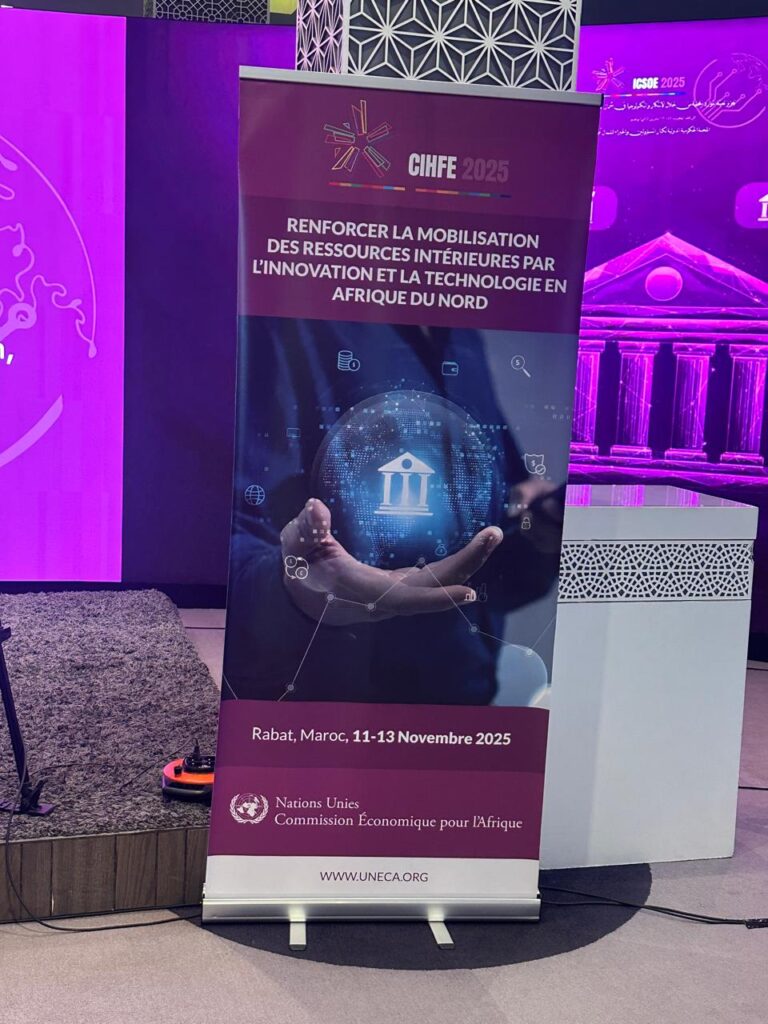
CAFRAD affirmed its presence by participating as an observer in the annual meeting of the Intergovernmental Committee of Senior Officials and Experts (ICSOE) for North Africa, organized by the Subregional Office for North Africa and held from 11 to 13 November 2025 at the La Tour Hassan Palace Hotel in Rabat, Morocco.
Held under the theme “Strengthening Domestic Resource Mobilization in North Africa through Innovation and Technology,” the meeting brought together senior government officials, regional experts, and representatives of international institutions. Discussions focused on high-level strategic topics of great importance for the region, including the sharing of country experiences related to enhancing domestic resource mobilization, which made it possible to identify best practices and common priorities for improving domestic revenue management (DRM). The discussions also addressed strategies aimed at broadening the tax base and optimizing remittances, considered essential levers for supporting development financing.
Participants further discussed the use of digital technologies and innovative solutions, as well as artificial intelligence for detecting tax fraud, in order to modernize public services, strengthen transparency, and improve the efficiency of public administrations. They explored various options for using these technologies effectively, with the goal of reducing tax losses.
CAFRAD’s participation reflects its commitment to monitoring regional dynamics and contributing, through its expertise, to initiatives aimed at modernizing African public administrations. The event also provided an opportunity to strengthen ties with institutional partners, exchange best practices, and explore new avenues of collaboration in the fields of public-sector innovation, digital governance, and administrative capacity-building.
Through this participation, CAFRAD consolidates its role as a key player in institutional development and the modernization of public administrations in North Africa and beyond.