


“Planetary Emergency: Nanoplastics and the Climate Crisis Threaten Our Food Supply – Science Day in Rabat”
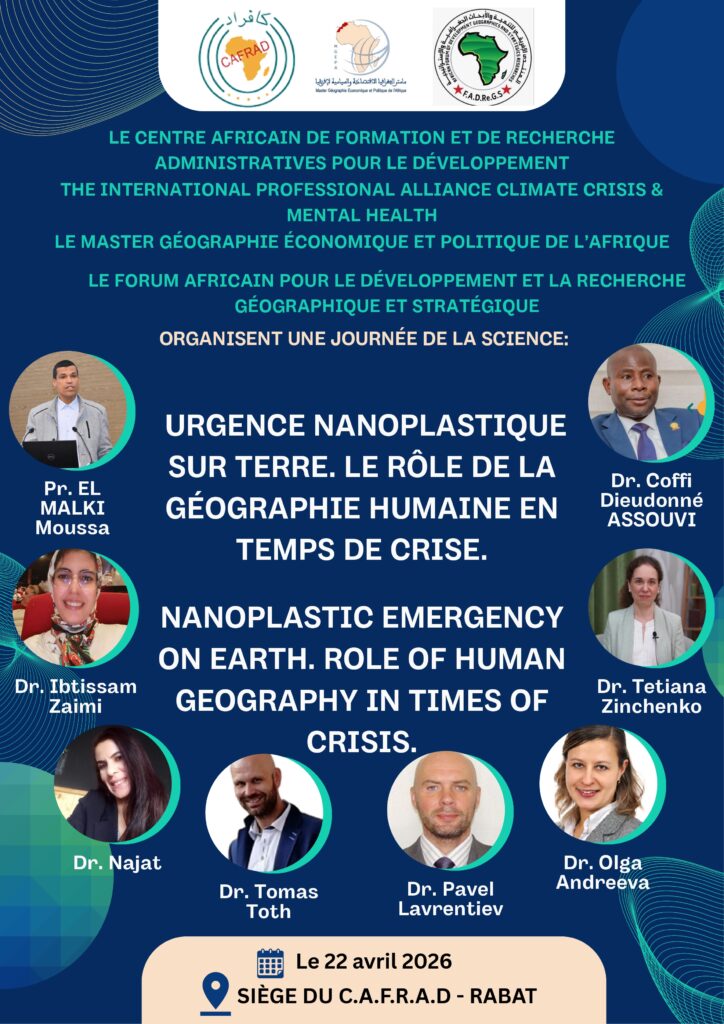
The African Training and Research Centre in Administration for Development (CAFRAD), in partnership with The International Professional Alliance Climate Crisis & Mental Health, the Master’s Program in Economic and Political Geography of Africa, and the African Forum for Development and Geographic and Strategic Research, is organizing a Science Day on April 22, 2026, at CAFRAD headquarters in Rabat.
This event will bring together international experts to discuss the urgent issue of nanoplastics on Earth and the role of human geography in times of crisis. Speakers include:
- Dr. Tomas Toth (Slovakia) – Climate Ambassador, specializing in the effects of nanoplastics on the ocean and climate.
- Dr. Tetiana Zinchenko (United Kingdom) – Psychotherapist and researcher on the impact of nanoplastics on human health.
- Dr. Olga Andreeva (Russia) – Expert in international law and climate activist.
- Dr. Pavel Lavrentiev (Belarus) – Economist and logistician, specialist in human geography in times of crisis.
- Dr. Ibtissam Zaimi (Morocco) – Lecturer and doctoral candidate in biological engineering.
- Dr. Najat (Morocco) – PhD in physical geography.
- Prof. El Malki Moussa (Morocco) – Coordinator of the Master’s program in Economic and Political Geography of Africa and President of the African Forum for Development and Strategic Geographic Research.
- Dr. Coffi Dieudonné Assouvi (Morocco) – Director General of CAFRAD.
Main topics addressed
- Nanoplastics crisis and food security: Every year, 11 million tons of plastic end up in the oceans, breaking down into micro- and nanoplastics, disrupting the climate, and contaminating the global food chain. Experts highlighted the impact of these particles on human health, nutrition, and ecosystems.
- Climate Crisis and Agriculture: Ocean warming, acidification, and extreme weather events are jeopardizing agricultural production and food availability, exacerbating food insecurity.
- The Role of Human Geography: Understanding the relationships between people, territories, and the environment is essential for anticipating and managing global crises. Human geography is becoming a strategic tool for food security and climate disaster management.
- Technological Solutions and Global Cooperation: The conferences emphasized the importance of international scientific collaboration and innovative technologies such as Low-Energy Nuclear Reactions (LENRs) and Neutrinovoltaic Technology to ensure energy independence in the face of climate disasters.
The event also underscored the urgent need for global strategies to reduce the impact of nanoplastics and protect human health and life. Participants called for a unification of scientific and citizen efforts to build a creative and resilient society in the face of global crises.
For more information about the event, see the technical sheet Link