CEPA 2026: Digital Transformation, Inclusion, and Governance: Towards Sustainable and Equitable Development
As part of its efforts to enhance CAFRAD’s international visibility, to affirm the Pan-African intergovernmental organization’s presence on the global stage, and with the aim of embodying the role of a key player in global and African governance, CAFRAD’s Director General, Dr. Coffi Dieudonné ASSOUVI, has committed the organization to participating actively and substantively in global gatherings of critical importance to Africa. As a leading institution in Africa, CAFRAD now seeks to serve as a vehicle for open and inclusive multilateralism—one grounded in rules, human-centered values, ethics, solidarity, and co-development.
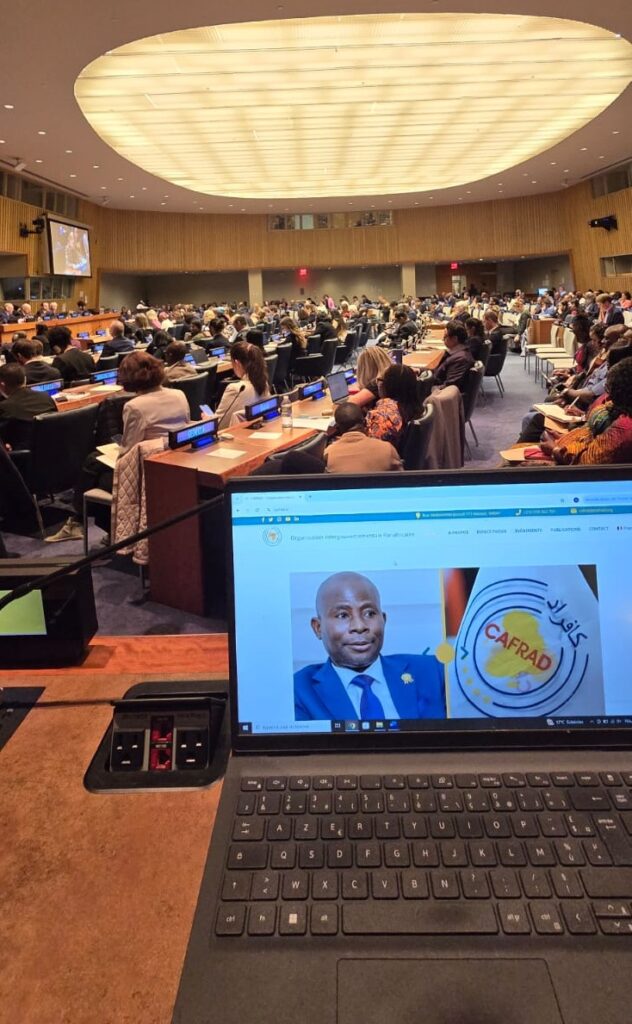
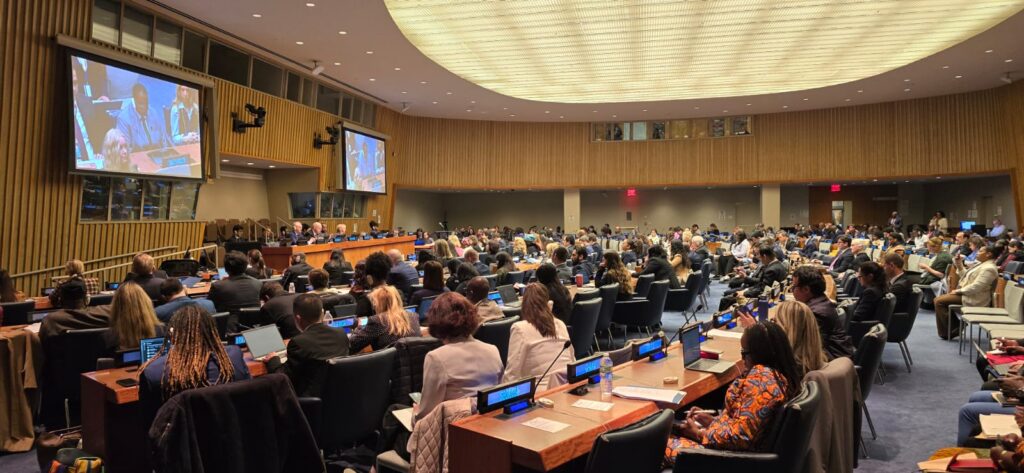
With the ambition of building high-performing, human-centered, and inclusive public administrations across Africa, CAFRAD participated in the twenty-fifth session of the Committee of Experts on Public Administration (CEPA), held from April 13 to 17, 2026, at United Nations Headquarters in New York, United States of America.
This session is situated within a broader international dynamic aimed at rethinking governance models in order to better address contemporary challenges. Held under the theme: “Transformative, Equitable, Innovative, and Urgent Actions to Restore Trust, Revitalize Institutions, and Achieve the Sustainable Development Goals: An Institutional and Governance Perspective Rooted in Multilateralism,” this session underscores the pivotal role of public institutions in building a more sustainable, inclusive, and resilient future.
The various panels and discussions focused on several key issues related to sustainable development and good governance.
Digital Census: A Strategic Lever for Governance
In a global context characterized by rapid transformations, significant strides have been made in the field of digital census-taking. These innovations represent a major turning point in the collection, processing, and utilization of public data. Today, digital tools enable faster, more precise, and more reliable data production, thereby enhancing the quality of public decision-making and the design of development policies.
However, significant disparities persist among countries regarding technical capacities, digital infrastructure, and implementation. This underscores the need for targeted strengthening of institutional and human capacities.
Digital Inclusion and Equitable Governance
Digital inclusion constitutes an essential pillar of modern and effective governance. It is inseparable from social equity and sustainable development.
Reducing the digital divide—particularly across geographic regions, social groups, and genders—is a strategic priority. Equality between women and men in accessing digital technologies must be fully guaranteed, without exception.
Strengthened International Mobilization
With the participation of approximately 115 Member States and observers, this session reflects a strong collective resolve to translate commitments into concrete actions.
The objective is clear: to make this gathering a results-oriented session, delivering measurable impacts on public governance systems.
Population, Technology, and Research: A Strategic Triangle
We are living through a period of profound transformation, in which the interactions among population dynamics, technological innovation, and scientific research are becoming decisive factors.
Strategic Priorities:
- Strengthening health systems, particularly reproductive health
- Developing societies that are resilient to economic and climatic shocks
- Ensuring equitable access to scientific and technological advancements
- Youth, Education, and Empowerment
Within the framework of international commitments—particularly those linked to the ICPD—it is essential to ensure that young people have the means to acquire the skills necessary to participate fully in economic, social, and institutional life.
Equitable access to education, knowledge, and technology is an indispensable prerequisite for achieving the Sustainable Development Goals.
Global Solidarity and Social Justice
In the face of current challenges, strengthened international solidarity is imperative. Sustainable development cannot be achieved without social justice and inclusion. Innovation, Governance, and the Future
Innovation and research must be fully integrated into public policies. They serve as essential levers for the transformation and modernization of public administrations.
Key Recommendation from Day One:
- Invest in robust, inclusive, and interoperable digital statistical systems, and support Least Developed Countries in their digital transition.
- Strengthen public innovation ecosystems and promote the responsible use of artificial intelligence in governance.
- Invest in inclusive education and the empowerment of youth and girls.
- Promote digital and scientific literacy and skills.
- Combat all forms of inequality and discrimination.
- Ensure universal access to essential services (health, education, digital).
- Increase investment in women and youth, and promote digital literacy—particularly among young people and women.
- Place vulnerable populations at the center of public policy.
- Align demographic policies with national development and innovation strategies.
- Ensure universal and equitable access to digital technologies.
- Develop inclusive and accessible digital public services.
- Integrate a gender perspective into all digital transformation policies.
Conclusion
In an era of major global transformations, this 25th session of the CEPA serves as a powerful reminder that sustainable development hinges upon a profound transformation of governance systems.
Digitalization, the reduction of inequalities, investment in youth, and gender equality constitute indispensable priorities.
In the face of technological, demographic, and economic challenges, it is imperative to adopt innovative, inclusive, and resilient public policies that place the most vulnerable populations at the heart of public action.
Finally, only through strengthened international cooperation—founded on multilateralism and solidarity—will we be able to effectively address global challenges and build a more equitable, stable, and sustainable future for all.
Active Participation of CAFRAD
In this context, CAFRAD took an active part in the proceedings of the 25th session of CEPA—represented by Ms. Hasnaa EDDAALITI—contributing to discussions on the modernization of public administration, digital transformation, and the strengthening of institutional capacities in Africa. Through its interventions, CAFRAD reaffirmed its commitment to more effective, inclusive, and innovation-driven public governance, particularly through the progressive integration of artificial intelligence and digital tools into administrative systems. This participation also served to highlight the importance of inter-African cooperation and the sharing of experiences in accelerating the implementation of the Sustainable Development Goals.