


World Rabies Day: CAFRAD Advocates for Strengthened Prevention and Cooperation for a Healthier Africa
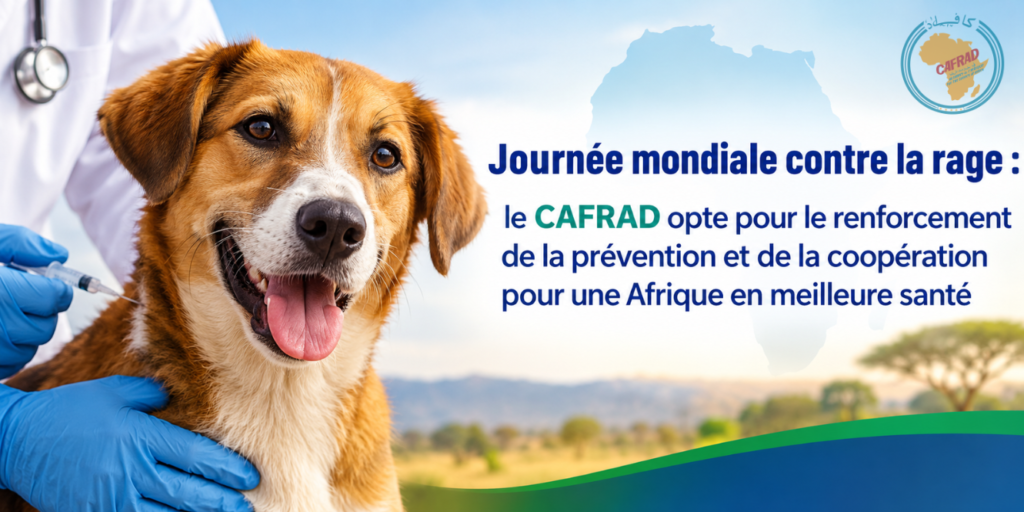
On the occasion of World Rabies Day, observed annually on September 28, CAFRAD joins the international community in highlighting the importance of prevention, awareness-raising, and cooperation in the fight against this preventable disease.
Rabies remains a public health challenge that requires coordinated mobilization among institutions, healthcare professionals, stakeholders in the animal sector, local authorities, and communities. Preventing the disease is fundamentally rooted in cooperation and the strengthening of national and regional capacities.
Prevention at the Heart of the Fight Against Rabies
Rabies is a viral disease that affects the central nervous system of mammals and can be transmitted to humans, primarily through the bite or scratch of an infected animal.
While the disease is almost always fatal once clinical signs appear, it can be prevented through proactive measures and prompt medical care following exposure.
Vaccinating dogs, raising public awareness, conducting epidemiological surveillance, and ensuring access to post-exposure prophylaxis are essential components of an effective strategy to combat rabies.
In the event of a bite or scratch from an animal that could potentially be infected, immediately and thoroughly washing the wound with soap and water—followed by a prompt medical consultation—is a critical step.
The “One Health” Approach: A Collective Response
The fight against rabies illustrates the importance of the “One Health” approach, which recognizes the intricate links between human health, animal health, and the environment. This approach calls for strengthening coordination among the various sectors involved and developing cooperation mechanisms that allow for the prevention of health risks in an integrated manner.
In the African context, such cooperation is of particular importance. It entails, among other things, the sharing of knowledge and best practices, the development of skills among relevant stakeholders, and the strengthening of surveillance and response systems.
Building capacity to better protect populations
Sustainable rabies prevention does not rely solely on health interventions. It also requires capable institutions, effective coordination, and appropriate expertise at every level of decision-making and action.
In this regard, building the capacity of public administrations and institutional stakeholders serves as a key lever for improving the design, implementation, and monitoring of public health policies.
Raising awareness within communities also plays a crucial role. Accessible information helps promote responsible behavior, improves understanding of risks associated with animals, and encourages people to seek health services promptly if exposed.
A shared responsibility
Eliminating human rabies transmitted by dogs requires concerted, long-term action. It depends on the complementary efforts of public authorities, national and regional institutions, human and animal health professionals, local communities, partner organizations, and the general public.
Through this World Day, CAFRAD highlights the importance of African cooperation, knowledge sharing, and the strengthening of institutional capacity to address the health challenges affecting the continent’s populations.
The fight against rabies serves as a reminder that effective prevention is rooted in anticipation, coordination, and collective action. Investing in the capabilities of institutions and frontline actors, strengthening cooperation mechanisms, and promoting public awareness all contribute to building more resilient and effective health systems in Africa. Together, let us strengthen capacities, share knowledge, and consolidate cooperation for a healthier Africa.