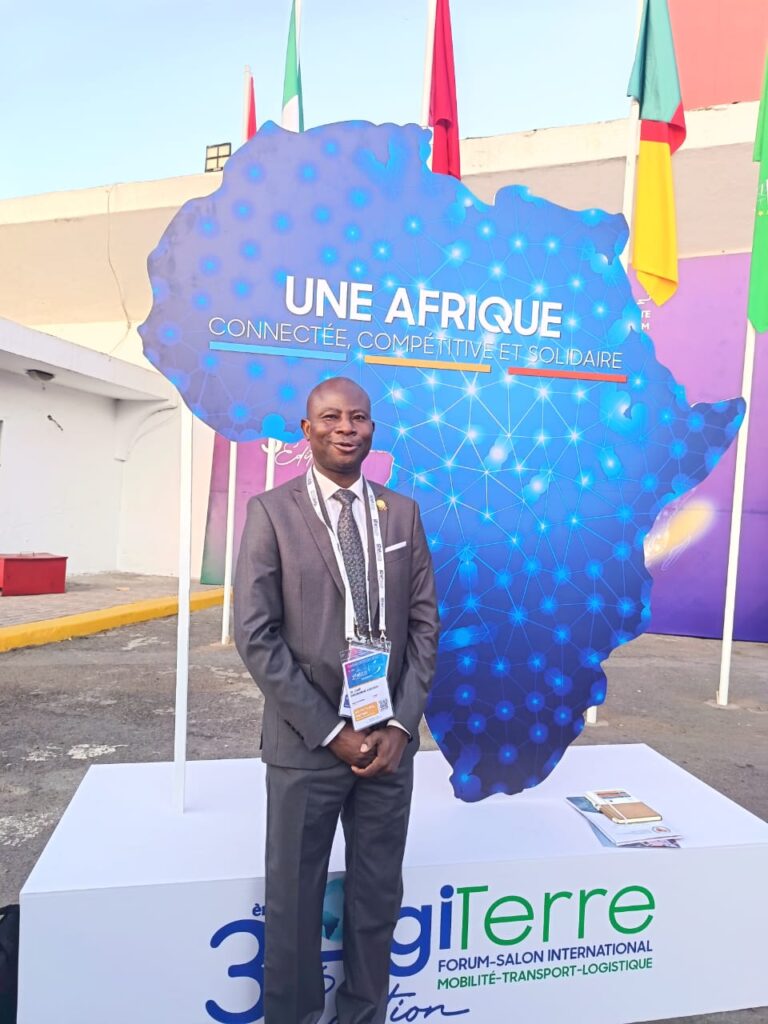
Address by Dr. Coffi Dieudonné ASSOUVI, Director General of CAFRAD, at the Third Edition of the International Mobility, Transport and Logistics Forum and Exhibition (LogiTerre)
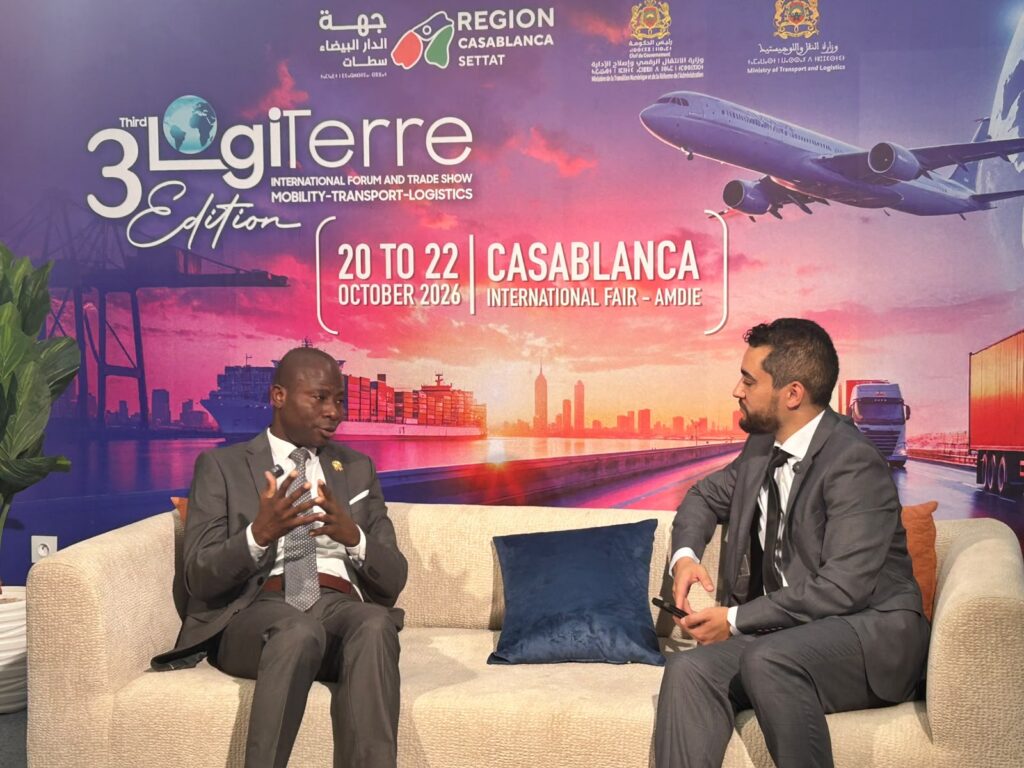
Date: 20–22 October 2026
Venue: Casablanca International Fair – AMDIE
Theme: The Economics of Transport and Logistics: A Strategic Lever for Africa’s Development
Under the High Patronage of His Majesty King Mohammed VI, May God Assist Him
The Minister of Transport and Logistics of the Kingdom of Morocco,
The Minister of Transport and Logistics of the Republic of Cameroon,
Your Excellencies, Ambassadors and Representatives of International and Regional Organisations in Morocco,
The President-in-Office of the African Union Economic, Social and Cultural Council (ECOSOCC),
The Secretary-General of the Arab Maghreb Union,
The Representative of the African Union Commission,
The President of the African Union of Transport and Logistics Organisations (UAOTL),
The President of the Casablanca-Settat Regional Council,
The Director of Trade in Services, Investment, Intellectual Property Rights and Digital Trade of the AfCFTA Secretariat,
Presidents and Representatives of Professional Transport and Logistics Associations,
Representatives of Trade Unions in the Transport and Logistics Sector,
Academics, Researchers and Experts in the Transport and Logistics Sector,
Transport and Logistics Operators,
Distinguished Guests,
Dear Participants, Ladies and Gentlemen, in your respective ranks, capacities and titles, with all due protocol observed,
Ladies and Gentlemen,
First and foremost, I wish to pay tribute where tribute is due.
In my capacity as Director General of the African Training and Research Centre in Administration for Development (CAFRAD), a pan-African intergovernmental organisation and institutional partner of the third edition of this Forum and Exhibition, held under the theme “The Economics of Transport and Logistics: A Strategic Lever for Africa’s Development”, I wish to express my deepest and most respectful gratitude to His Majesty King Mohammed VI, May God Assist Him, for graciously granting His High Patronage to this Forum.
This event falls within CAFRAD’s mandate and provides an important platform for stakeholders in the transport and logistics sector to exchange views on innovative solutions and share experiences and best practices in this field.
I would also like to pay a special tribute to His Majesty King Mohammed VI, May God Assist Him, for launching the Royal Atlantic Initiative, one of whose strategic objectives is to position the Kingdom of Morocco as a logistics hub, provide landlocked African countries with access to the Atlantic Ocean, and strengthen connections between Africa, Europe and the Americas.
Finally, I extend my warm congratulations and profound gratitude to His Majesty King Mohammed VI, May God Grant Him Victory, for successfully navigating one of the most challenging tests in Africa’s political life, namely the organisation of peaceful legislative elections, which led to the establishment of the House of Representatives and the formation of a new Government on 16 October 2026.
Furthermore, I have the distinct honour of extending my warmest and most sincere congratulations to Her Excellency Ms Fatima Ezzahra El Mansouri, Head of Government, on her distinguished appointment to lead the Government of the Kingdom of Morocco by His Majesty King Mohammed VI, May God Assist Him.
This appointment, following the legislative elections of 23 September 2026, together with the formation of your Government on 16 October 2026, marks the beginning of a new chapter in the governance of the Kingdom. I sincerely hope that your leadership will contribute to strengthening institutions and fulfilling the legitimate aspirations of the Moroccan people.
I greatly appreciate the commitment demonstrated by the new Government team, which has already identified seven (7) priorities in its 2026–2031 programme of action, on 19 October 2026.
I take this opportunity to extend to the Head of Government and all members of the new Government my most respectful wishes for happiness, good health and every success in the discharge of their high responsibilities.
The entire staff of the African Training and Research Centre in Administration for Development (CAFRAD), a pan-African intergovernmental organisation, joins me in conveying its congratulations to the Moroccan people and wishing them peace, stability, prosperity and sustainable progress. The peaceful conduct of the elections reflects the importance attached to institutional stability and citizen participation, both of which provide favourable conditions for the continuation of the Kingdom’s development efforts.
I would also like to express my most sincere gratitude to the Government of Morocco for the continuous support that the Kingdom has extended to the African Training and Research Centre in Administration for Development (CAFRAD) since its establishment in 1962.
Your Excellency, Minister of Transport and Logistics of the Kingdom of Morocco,
Please accept my warmest congratulations on having earned the confidence of the people, the trust of His Majesty King Mohammed VI, May God Assist Him, and that of the new Head of Government.
Your reappointment to head the Ministry of Transport and Logistics reflects the positive achievements recorded during your previous tenure. Indeed, the modernisation of port, airport, railway and road infrastructure stands among the major accomplishments of your department.
I would also like to express my sincere appreciation to the President of the African Union of Transport and Logistics Organisations and to all the partners of this Forum for involving the African Training and Research Centre in Administration for Development (CAFRAD) in this important event.
Honourable Ministers,
Ladies and Gentlemen,
Logistics lies at the heart of, and acts as a catalyst for, the implementation of the African Continental Free Trade Area (AfCFTA) and the World Trade Organization’s Trade Facilitation Agreement (TFA).
Successful regional integration leads to the free movement of people, goods, capital and information, as well as the recognition of qualifications, flexicurity and cybersecurity.
This is precisely why CAFRAD, which works towards building the Africa we want through South-South cooperation, intra-African cooperation and regional integration, guided by the High Royal Vision of His Majesty King Mohammed VI, May God Assist Him, has accepted the invitation to participate in this third edition of the Forum and Exhibition, held under the theme: “The Economics of Transport and Logistics: A Strategic Lever for Africa’s Development.”
Honourable Ministers,
Ladies and Gentlemen,
“There can be no tactics without logistics. If logistics says no, it is right: the operational plan must be changed.”
— General Dwight D. Eisenhower
Although originally referring to military logistics, this statement is equally applicable to modern freight transport, where the movement of goods depends entirely on the effective organisation of flows.
The logistics environment is constantly evolving and becoming increasingly complex. We have entered an era characterised by global value and supply chains (GVSCs), globalisation, the development of large-scale transport systems, geologistics, digital technologies, artificial intelligence, environmental sustainability, widespread risks and, above all, the dominance of global corporations in the sector.
These transformations make it essential to develop intelligent mobility solutions, strengthen regional and international cooperation, and adapt and renew the skills of transport and supply chain operators, as well as those of all other stakeholders, including decision-makers and policymakers responsible for transport and logistics.
This globalised environment requires continuous monitoring and comprehensive, ongoing mastery of all strategic variables, including vision, international standards, organisational structures, human resources, communication, costs, prices and technology, in order to maintain and strengthen competitiveness and ultimately achieve logistical maturity.
Undoubtedly, transport and logistics constitute a complex function that requires substantial financial resources. They encompass air, rail, port, maritime, ocean, road and, increasingly, digital transport. Their management involves handling physical flows and the associated data, including regulatory, human, financial and customs-related information, with the aim of providing stakeholders with all the resources required to meet identified needs, while complying with human, economic, technical and legal conditions, as well as service quality, reliability and safety requirements.
According to the Council of Supply Chain Management Professionals, logistics is defined as “the integration of two or more activities for the purpose of planning, implementing and controlling the efficient flow of raw materials and products.”
These activities may include all types of customer services, demand forecasting, distribution-related information and communications, inventory control, materials maintenance, order processing, purchasing, after-sales services, the handling of returned goods, the actual transportation of goods, as well as warehousing and storage.
Logistics serves multiple purposes. In the short term, it aims to optimise physical flows from upstream to downstream in terms of procurement, operations, maintenance and safety. In the medium term, it involves preparing action plans and budgets, including the control of logistics costs. In the long term, its purpose is to master complexity through knowledge and innovation in order to create a competitive advantage.
Thus, for a company to remain competitive, it must master three key elements: the product, the process and time.
This requires controlling the entire supply chain through the establishment of an integrated logistics function, commonly known as Supply Chain Management (SCM).
Indeed, the specific field of logistics requires the assessment of organisational dysfunctions in order to improve performance. In this regard, the contribution of strategic governance to logistics is crucial. Going beyond the scope of a traditional audit, strategic governance provides a framework against which logistics operations can be assessed, based on clearly defined criteria such as strategic vision, internal control, standards, procedures, regulations and evaluation mechanisms.
In short, governance is concerned with participatory strategic vision, organisational structures, skills, information and communication, responsibility, accountability, transparency and the continuous assessment of risks.
According to the OECD (2025), global value chains (GVCs) account for approximately 70% of international trade, with services, raw materials, spare parts and components crossing borders, often several times.
As the trend towards the development of transnational supply chains intensifies, new challenges are emerging in terms of sustainability, efficiency and resilience. This growing complexity calls for policies that adopt a comprehensive approach to the management of supply chains and global trade.
Global supply chains are under pressure. Geopolitical tensions, natural disasters, public health restrictions, regulatory uncertainty and economic fluctuations are disrupting the trade policy landscape and compelling governments and businesses to identify measures that support and strengthen supply chain resilience without resorting to protectionist or assistance-based measures.
The fundamental challenge is to ensure economic security and prosperity while preserving the benefits of open markets and a rules-based international trading system.
Governments are increasingly expected to play an important role in strengthening the resilience of critical supply chains. Cooperation and coordination with the private sector will be essential to achieving this objective.
In logistics and transport alike, every day brings its own challenges and new opportunities.
In Africa, the challenges are numerous. They range from inadequate and critical infrastructure and skills shortages to various administrative obstacles, cumbersome procedures and widespread insecurity, all of which hinder the free movement of goods and have serious economic, social and human consequences.
It is precisely in this area that CAFRAD, which I have had the honour of leading since 9 July 2024, positions itself as a key player in skills development, support for the formulation of public policies aimed at modernising transport and logistics, and the strengthening of institutional capacities and innovation.
Honourable Ministers,
Ladies and Gentlemen,
The African Training and Research Centre in Administration for Development (CAFRAD), as a pan-African intergovernmental organisation dedicated to South-South scientific cooperation, has the following mandate:
- To undertake, promote and coordinate comparative studies and research on administrative issues relating to Africa’s economic and social development.
- To organise scientific meetings, study programmes and professional development sessions for senior executives from the public, semi-public and private sectors of African countries who play a significant role in development.
- To establish a framework for the recruitment and deployment of African consultants and experts in order to address the specific needs of African countries.
- To collect, analyse and disseminate documentation relating to the structure, organisation and administrative methods of different African countries.
- To produce and disseminate relevant publications.
- To serve as a host institution and scientific liaison body, particularly for public administration institutions and schools, universities and, more generally, all organisations whose activities fall within its areas of competence.
- To develop and strengthen human capacities and African expertise in innovation, the modernisation of public services and governance.
- To support the development strategies of governments and related organisations in improving the performance of public services and State institutions.
- To promote modern governance, visionary leadership and participatory and equitable public policies in Africa, serving the interests of its populations.
- To improve and promote public administration systems and comprehensive governance across Africa through interdisciplinary, multidisciplinary and transdisciplinary research and training programmes addressing the challenges and opportunities essential to the development of African countries.
- To serve as an institution of excellence and provide support to governments and organisations in strengthening capacities, fostering innovation and improving public administration performance, with a view to enhancing services delivered to citizens.
The fundamental principle underpinning CAFRAD’s work is to respond to the training and technical assistance needs of African countries in the field of Development Administration.
Indeed, socio-political and technological changes, global transformations and dynamics, the ongoing ecological and digital transitions, and the economic and financial crises weakening African development structures and institutions all call for closer and more appropriate assistance to CAFRAD member countries.
Such assistance is essential to enabling them to transform, modernise and develop the core structures of their public and private administrations in support of national development.
The imperative of assisting member countries in better understanding and managing the structural transformations currently underway must be accompanied by continuous and in-depth reflection on solutions to address the inadequacies of public administration and private-sector management.
Four objectives stem from this principle of providing close and targeted technical assistance to African countries:
- i) To develop methodologies and tools that provide a better understanding of African public administrations and promote their systematic use by member countries;
- ii) To promote senior public- and private-sector executives equipped with new management techniques and methods, both at central government level and within decentralised local and regional authorities;
iii) To provide member countries with appropriate expertise to address specific sectoral challenges and develop a network of African experts and consultants;
- iv) To develop cooperation and exchanges of scientific and technical experience among African public and private administration institutions.
First and foremost, CAFRAD is an African Centre for Research in Development Management (CARMAD). This concept encompasses:
- State public administration and public institutions;
- Local and regional authorities, particularly in relation to decentralisation;
- The semi-public sector;
- Private enterprises.
CAFRAD’s research objectives and content, as well as those of the future CARMAD, are formulated and targeted in a more integrated and coherent manner. CAFRAD’s new orientation is based on action-oriented solutions and programmes in Development Management.
The Centre promotes innovative thinking, the generation of new knowledge, and the implementation of forward-looking interdisciplinary studies and research on the challenges and opportunities facing African development.
It contributes to regional integration and intra-African cooperation through the design and implementation of partnership projects and networks in the fields of public administration and governance.
CAFRAD is the second African organisation after the African Union and the first centre dedicated to resolving administrative challenges related to development, as well as to building, reinventing, modernising and continuously improving administrative and governance systems across the continent.
Since my election as Director General, CAFRAD has embarked on a process of renewal to adapt its programmes and services to the new African context and to the development needs of African countries. To this end, we have designed several projects, including a skills development programme.
Indeed, the renewed CAFRAD, committed to the structural, systemic, global, digital, intelligent and sustainable transformation of African public and private administrations, regards the development of transport and logistics as a fundamental condition for national development and a key factor in building a stable and prosperous world order.
CAFRAD’s contribution to this process of Africa’s structural transformation is now more crucial than ever.
CAFRAD can help create the appropriate conditions for the continent to play its rightful role in the global economy and international negotiations, while ensuring the promotion of sustainable development, digital and ecological/energy transitions, the integration of African economies, and the integration of research and training across all fields, particularly democratic governance.
My leadership is focused on:
- Transforming CAFRAD into a leading centre of excellence and an applied training institution dedicated to generating innovative ideas, knowledge, skills and talent in support of the implementation of the African Union’s Agenda 2063, the United Nations Sustainable Development Goals (SDGs) for 2030, and national development programmes.
- Promoting best practices in administration, public management and governance, while encouraging performance, transparency, a culture of public policy evaluation and accountability across Africa.
For this reason, I would like to use this platform to appeal to the African Union, the Regional Economic Communities, the African Development Bank, subregional development banks, member states, the African private sector and African civil society to recognise CAFRAD as a fully-fledged institution of the African Union, renew their confidence in the Centre, and provide it with the attention and financial support required to successfully implement projects aimed at building the Africa we aspire to in the twenty-first century.
These objectives are to be pursued through training, research, benchmarking, publications and advisory services.
Africa cannot be built without CAFRAD.
Likewise, I would like to call for the return of the African Development Bank (AfDB), the United Nations Development Programme (UNDP), the Bretton Woods Institutions, government development agencies and all partners financing African development to CAFRAD, so that together we can build African capacities for peace, security, governance and development.
CAFRAD must become a priority for member states, African organisations and all stakeholders investing in human capital.
“We must radically change the way we recruit, train and select our senior civil servants, and the way we build their career paths.”
— Emmanuel Macron, President of the French Republic, April 2021.
Building a Development Administration, a Project-Based Administration and a Digital Administration requires new skills and competencies.
CAFRAD aspires to become a leading institution and a central operational partner at the forefront of tomorrow’s public action challenges.
Honourable Ministers,
Ladies and Gentlemen,
In conclusion, I would like to propose the following actions:
- Strengthen cooperation among border officials and transform customs officers from revenue collectors into facilitators of trade and commercial exchanges.
- Position CAFRAD as a dedicated institution for implementing the roadmap that will emerge from these deliberations. In this regard, CAFRAD should coordinate the development and implementation of an African regional programme for the modernisation and transformation of mobility across the continent.
- Encourage professional associations and trade unions in the transport and logistics sector to work closely with CAFRAD to harmonise, Africanise and certify training programmes and promote skills development.
- Strengthen South-South cooperation and regional economic integration through the elimination of all customs and non-tariff barriers between African countries, supported by strong political will.
At CAFRAD, we transform African public and private administrations for the well-being of citizens!
At CAFRAD, we support the transformation of public action for the sustainable and inclusive development of African States!
A NEW LEADER, A NEW VISION, A NEW CAFRAD!
I would like to reiterate my profound gratitude to His Majesty the King of Morocco. May God Glorify Him.
Thank you.