AI, Cybersecurity, and Sovereignty: CAFRAD at the Heart of Strategic Discussions
Summary of Proceedings
Theme of the International Symposium: Artificial Intelligence and Cybersecurity: Issues and Perspectives
Date: March 26, 2026
Location: National School of Business and Management – Kenitra
Organizers:
CAFRAD, ENCGK, and partner institutions organized this symposium in coordination with the Center for International Studies on Security, Migration, and Flows – CEISMF.
1- General Context:
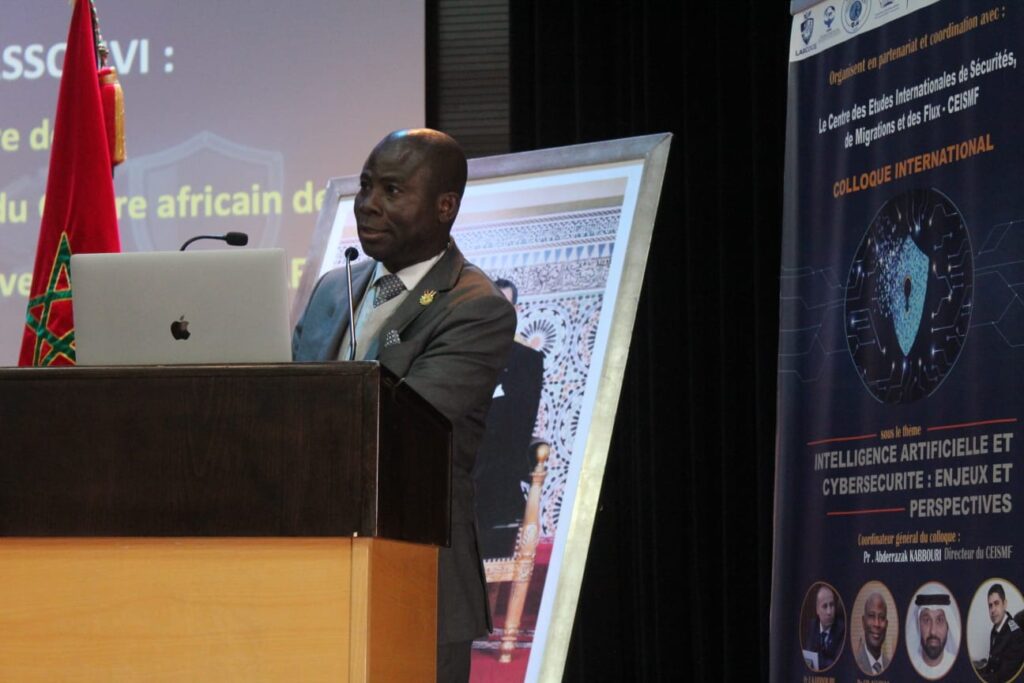
In a context marked by the intensification of digital transformation, artificial intelligence is now emerging as an essential strategic tool in the field of cybersecurity. “Private actors are becoming more powerful than states, which challenges the fundamental principle of classical geopolitics: the state as the central and sovereign actor in international relations,” he quoted General Marouane Hejjouji. AI is redefining cyber conflict: automating attacks, predictive detection, and protecting critical infrastructure. Consequently, cyberspace has no physical boundaries, and mastering cyberspace is becoming a fundamental attribute of contemporary state sovereignty. Cybersecurity is therefore becoming the new bulwark of the modern state. Indeed, the African Training and Research Centre in Administration for Development (CAFRAD), as a leading pan-African institution, plays a structuring role in promoting inter-institutional dynamics. It is actively engaged in consolidating administrative transition and modernization processes, guiding them towards a controlled and sovereign digital transformation. It is important to note that on March 26, 2026, CAFRAD, as co-organizer of this international conference, was represented by His Excellency Dr. Coffi Dieudonné Assouvi, Director General, guest of honor and speaker, accompanied by his delegation.
2- Strategic Academic Dimension:
This symposium thus constituted a high-level forum for reflection, fostering convergence between theoretical approaches and operational realities. Several institutional and academic representatives participated in this meeting and shared their expertise through their presentations.
During the opening session, the Director General of CAFRAD delivered an inaugural address, beginning with thanks to the organizers and all the participants. He emphasized that “research plays a central role in royal initiatives,” highlighting the strategic importance of knowledge production in development dynamics. This session was enriched by the presentation of Professor Touab Omar, who drew attention to the challenges related to artificial intelligence, emphasizing that it can be both a strategic and potentially risky tool for territorial infrastructure. He also emphasized the need to anticipate cyber threats, stating that “to protect oneself against cybercrime, it is essential to expect incidents,” while urging users to be more vigilant.
Furthermore, Professor Aziz Moutahaddib reminded the audience, from a geopolitical and informational perspective, that “whoever controls information controls power,” thus highlighting the central role of information control in contemporary power dynamics.
3- Summary of Presentations:
The presentations allowed the panelists, including:
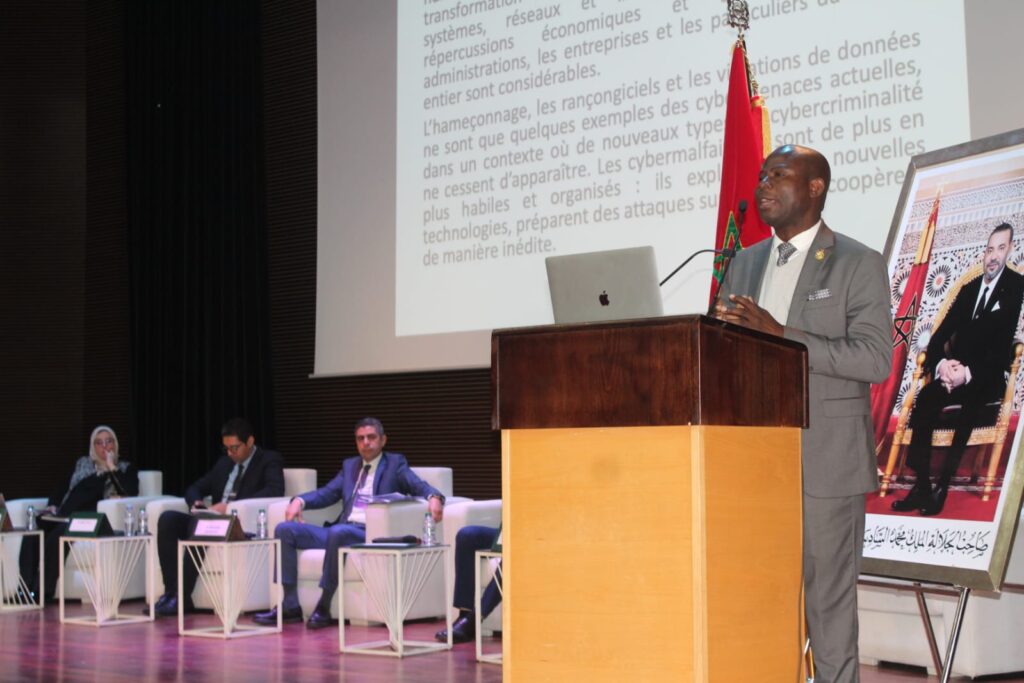
Dr. Coffi Dieudonné Assouvi, Director General of CAFRAD, to analyze the profound issues related to cryptocurrencies and cryptocrimes, under the theme: “Cryptocrimes: Towards a Special Cyber Criminal Law.” To this end, he strengthened his argument by drawing on an excerpt from the Message addressed by His Majesty King Mohammed VI, may God assist him, to the participants of the Annual Meetings of the World Bank Group and the International Monetary Fund, held on Friday, October 13, 2023. He also highlighted the major challenges facing states in the areas of artificial intelligence and digital technology, particularly the lack of autonomy and the insufficient harmonization of legal frameworks. In this context, he proposed a discussion on structuring a “smart penal code,” linked to the emerging dynamics of the cryptocurrency business. The Managing Director emphasized the need for Africa to position itself as a pioneering player, stating that “Africa must be a pioneer to inspire others.”
Professor Marouane Hejjouji, the Comptroller General, highlighted the measures implemented by the Kingdom to combat online cybercrime (e-Blagh), emphasizing the efforts undertaken in this area. In this regard, he raised a crucial question concerning the ability of states to protect their sovereignty, asking: “Can this sovereignty truly be protected?” He further framed his remarks by stating that “these types of obstacles can never be overcome without sharing and collaboration,” thus stressing the necessity of a collective approach.
For his part, Professor Abderazak Kabbouri identified three fundamental elements enabling a state to consider itself digitally sovereign. He notably emphasized the importance of having adequate infrastructure, artificial intelligence (AI) capabilities, and robust cybersecurity systems.
The questions raised contributed to intensifying the debates, particularly around the issue posed by the Auditor General: “To what extent are artificial intelligence and cybersecurity reshaping the foundations of power and influence in international relations, and what restructuring do they induce in the hierarchies of the world order?”
Within this context, Professor Rida Jlil highlighted the geopolitical stakes of artificial intelligence, viewed simultaneously as a lever of power, a cybersecurity tool, and a factor in the reshaping of the world order. He particularly emphasized the importance of skilled human resources, drawing on Francis Bacon’s famous phrase, “knowledge is power,” while introducing a conceptual analogy he termed the “theory of water.” Furthermore, he made an analytical distinction between digital transition and digital transformation, emphasizing that the former refers to a process of gradual adaptation, while the latter implies a structural reconfiguration of systems. Finally, he posed a central question: how can states strengthen their digital sovereignty without disrupting their ongoing transformation?
4- Conference Summary:
The discussions facilitated the exchange of theoretical and operational approaches around major themes such as cryptocrime, digital sovereignty, cybersecurity, and the geopolitics of artificial intelligence. Furthermore, the conference highlighted the importance of human capital and information mastery as key drivers of power.
Ultimately, this meeting confirmed that cybersecurity is now an essential dimension of contemporary governance and that Africa is called upon to position itself as a pioneering player in building sovereign digital models, adapted to its realities and strategic ambitions.