


Dr. Coffi Dieudonné ASSOUVI, Director-General of CAFRAD, attends the handover ceremony at the Ministry of Artificial Intelligence, Digital Transformation, and Administrative Reform
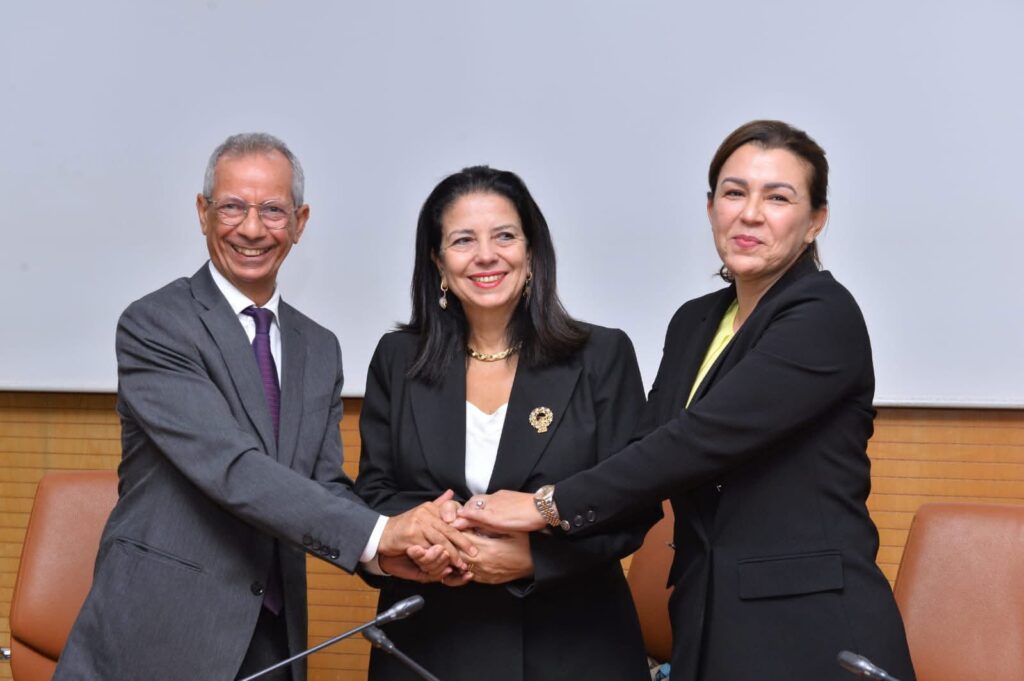
Rabat, October 19, 2026 – The handover ceremony between the outgoing Minister Delegate to the Head of Government in charge of Digital Transition and Administrative Reform, Ms. Amal El Fallah Seghrouchni, and Mr. Ahmed Rahhou—appointed by His Majesty King Mohammed VI, may God assist Him, as Minister of Artificial Intelligence, Digital Transformation, and Administrative Reform—took place on Monday, October 19, 2026, in Rabat.
This transfer of responsibilities follows the formation of a new government, led by the Head of Government, in the wake of the legislative elections held on September 23, 2026. The appointment of Mr. Ahmed Rahhou as Minister marks a new phase in advancing the Kingdom’s strategic initiatives regarding digital transformation, artificial intelligence, and the modernization of public administration.
On this occasion, Mr. Ahmed Rahhou expressed his pride in the high level of Royal trust placed in him, emphasizing the strategic importance of the mandates entrusted to the Ministry and their alignment with several priority public policies. He specifically highlighted the role of digitalization and artificial intelligence as complementary drivers of transformation—both for improving the quality of public services and for fostering an innovative economic ecosystem that generates added value and creates jobs. The new minister also emphasized the need to strengthen conditions conducive to innovation, investment, and the development of start-ups, while paying particular attention to human resource qualifications, digital sovereignty, cybersecurity, and data protection. The implementation of these priorities will rely on a cross-cutting, participatory approach, based on consultation with various ministerial departments and relevant stakeholders.
For her part, Ms. Amal El Fallah Seghrouchni presented the key achievements realized during her tenure, notably the rollout of the “Morocco Digital 2030” national strategy, the launch of the D4SD program, the organization of the first National Conference on Artificial Intelligence, and the development of a national roadmap for this field. These initiatives reflect Morocco’s ambition to move beyond the role of a mere consumer of technology, aiming instead to bolster its capacity to design, produce, and develop digital solutions, while simultaneously consolidating its technological sovereignty.
She also highlighted progress made in the reform of the public administration, which seeks to improve the quality of services provided to citizens and businesses, simplify administrative procedures, enhance transparency and governance, leverage human talent, and promote administrative deconcentration. These directives are part of a broader transformation process aimed at building a modern, efficient, and agile administration that is better aligned with the expectations of its users and clients.
Furthermore, Ms. Aïcha Guellaa—appointed Minister Delegate in charge of Public Administration Reform, reporting to the Minister of Artificial Intelligence, Digital Transformation, and Public Administration Reform—reaffirmed her commitment to advancing reform projects in close collaboration with the sector’s professionals and experts. She notably emphasized the need to transform the public administration into a catalyst for promoting investment and creating jobs—particularly for young people—grounded in a spirit of complementarity, accountability, and the continuity of public action.
This handover ceremony reflects a commitment to continuing and deepening the reforms initiated by the Kingdom of Morocco in the areas of digital transformation, artificial intelligence, and administrative modernization. It also underscores the pivotal role of public institutions, skills development, and innovation in building an efficient, inclusive, and forward-looking public administration.
The handover ceremony between the outgoing Minister-Delegate, Ms. Amal El Fallah Seghrouchni, and her successors took place in the presence of several institutional figures, including Dr. Coffi Dieudonné Assouvi, Director-General of the African Training and Research Centre in Administration for Development (CAFRAD)—a pan-African intergovernmental organization. His attendance underscores the Centre’s interest in the institutional developments within the Kingdom of Morocco, as well as its commitment to strengthening cooperation with national institutions—particularly in the areas of public administration modernization, digital transformation, and the promotion of innovative, high-performing public governance.
For the African Training and Research Centre in Administration for Development (CAFRAD), these strategic directions are of particular significance. They align with the Centre’s own priorities, which focus on developing institutional capacities, modernizing public governance, and supporting the transformation of African administrations—all in service of the continent’s sustainable and inclusive development.