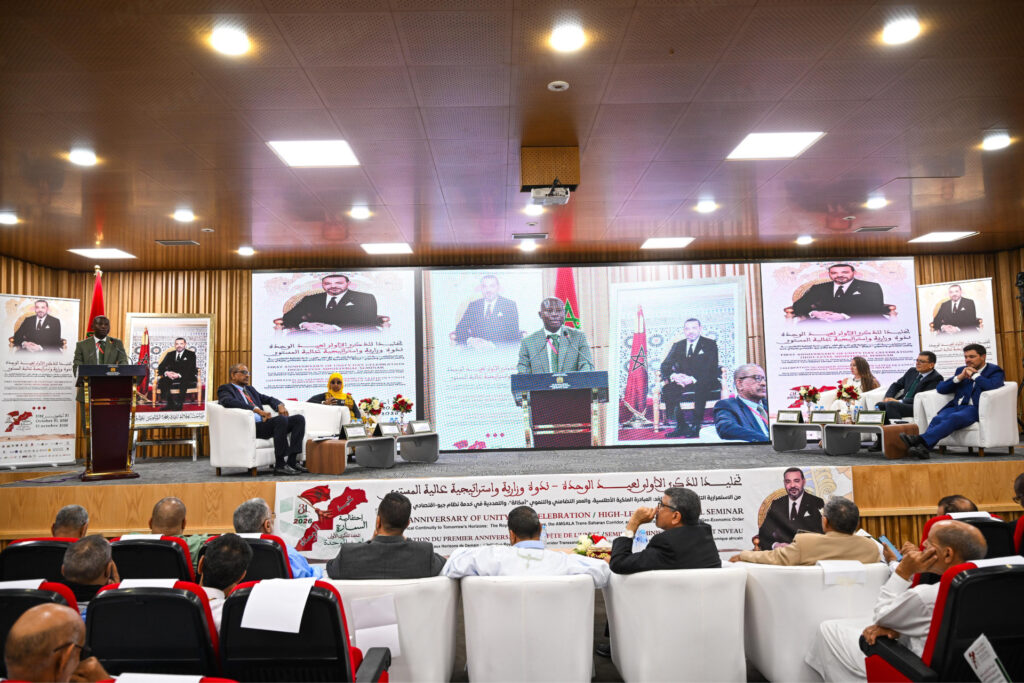
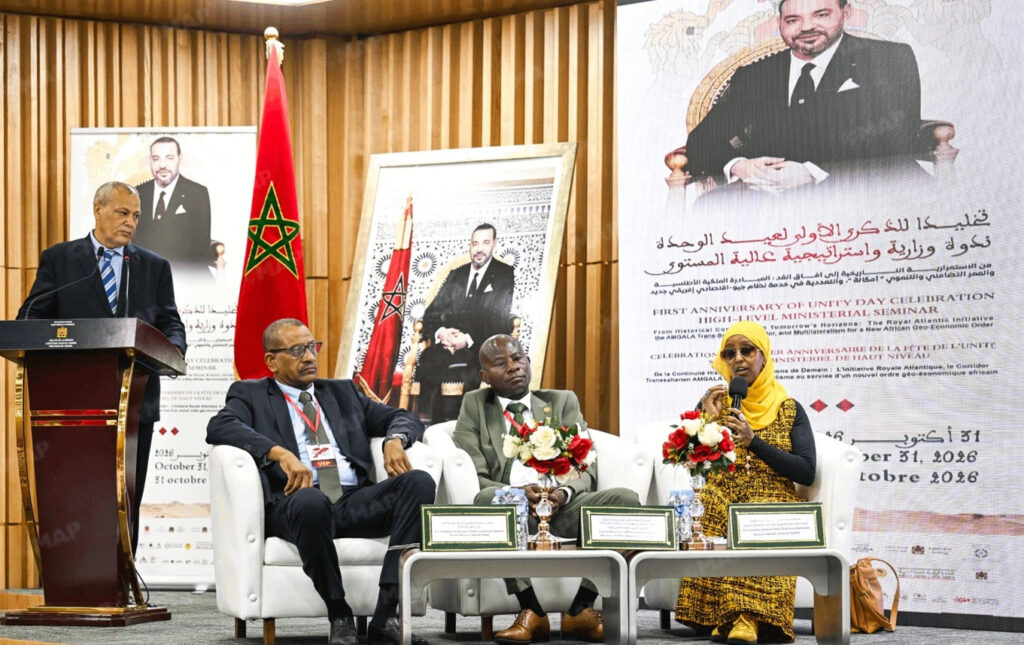
CAFRAD in Es-Semara: The Royal Atlantic Initiative and Trans-Saharan Connectivity at the Heart of New African Geoeconomic Perspectives.
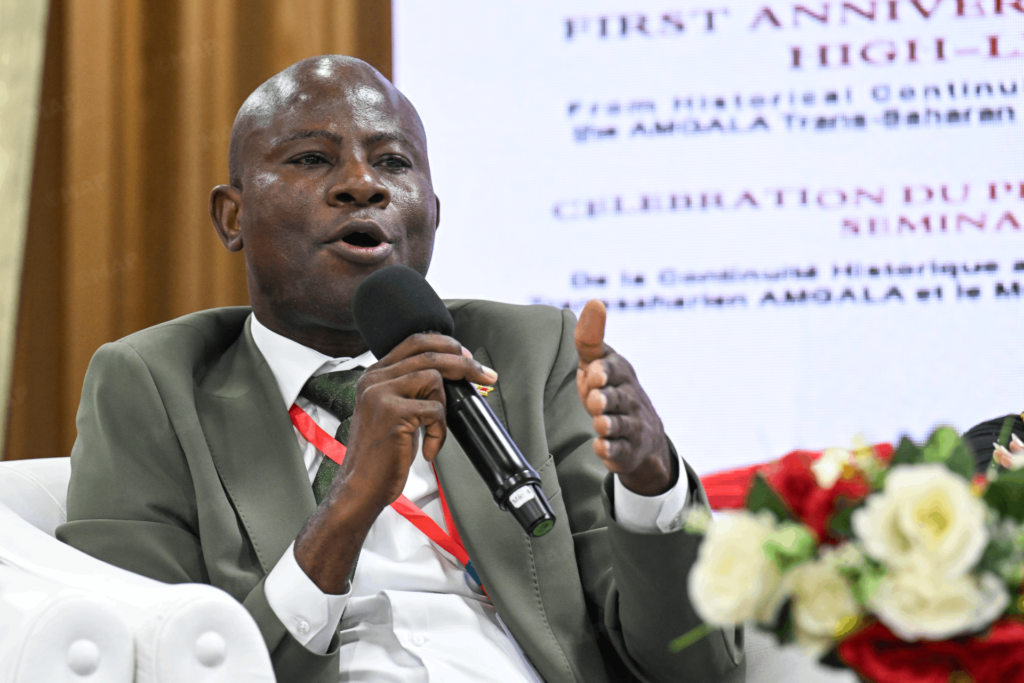
The Director-General of CAFRAD, serving as a guest of honor at the high-level ministerial seminar, contributes to the strategic dialogue on African integration, South-South partnerships, and the emergence of a new continental geoeconomic order.
Es-Semara, Kingdom of Morocco, October 31, 2026 – On the sidelines of the first anniversary celebration of the Day of Unity, the African Training and Research Centre in Administration for Development (CAFRAD) participated in a high-level ministerial seminar held in Es-Semara, themed: “From Historical Continuity to Future Horizons: The Royal Atlantic Initiative, the Amgala Trans-Saharan Corridor, and Multilateralism in the Service of a New African Geoeconomic Order.”
Invited as a guest of honor, the Director-General of CAFRAD, Dr. Coffi Dieudonné ASSOUVI—a Minister Plenipotentiary of the Republic of Benin—took an active part in this strategic gathering. He delivered an official address during the opening ceremony and subsequently participated in a high-level ministerial and strategic dialogue alongside prominent African figures.
The event served as a key forum for reflecting on new dynamics of continental cooperation, issues surrounding connectivity, and prospects for strengthened African integration.
The Royal Atlantic Initiative and the Amgala Trans-Saharan Corridor: New Perspectives for African Integration
At the core of the discussions were two major strategic levers for the continent’s future: the Royal Atlantic Initiative and the Amgala Trans-Saharan Corridor. The discussions highlighted the prospects offered by these initiatives in terms of regional connectivity, mobility, trade, investment, and shared development.
Particular attention was also given to the role of strategic infrastructure in bringing African economies closer together, facilitating the flow of trade, and developing regional and continental value chains.
These issues are part of a broader reflection on the conditions necessary for sustainable African economic integration—an integration rooted in the complementarity of territories, cooperation between states, and the leveraging of the continent’s full potential.
The Director-General of CAFRAD at the heart of the ministerial and strategic dialogue
Following his official address at the opening ceremony, Dr. Coffi Dieudonné ASSOUVI participated in a high-level ministerial and strategic dialogue themed: “From Historical Continuity to New African Geoeconomic Dynamics.”
Alongside His Excellency Professor Cheikh Saad Bouh CAMARA, former Minister of Energy and Hydraulics of the Islamic Republic of Mauritania, and Her Excellency Aida TOLA Lensa Mekonnen, former Minister of State and Secretary of State for Tourism of the Federal Democratic Republic of Ethiopia, the Director-General of CAFRAD contributed to discussions on the continent’s geoeconomic transformations and new prospects for cooperation.
The key themes of the dialogue included:
- The Royal Atlantic Initiative and new prospects for African connectivity and economic integration;
- The Amgala Trans-Saharan Corridor as a driver for mobility, trade, investment, and shared development;
- African multilateralism and new dynamics of South-South cooperation;
- Strategic infrastructure and value chains as instruments for bringing African economies closer together and fostering their integration.
Through his participation, the Director-General of CAFRAD took part in a strategic reflection that places institutional cooperation, economic complementarity, and multilateral dialogue at the heart of the continent’s development prospects.
Governance, South-South cooperation, and multilateralism: essential levers for an integrated Africa
The discussions also underscored the importance of African multilateralism and the strengthening of South-South cooperation mechanisms in building new economic and institutional relations.
In a context where global geoeconomic balances are being reshaped, the ability of African countries to develop strategic partnerships, pool their resources, and strengthen their infrastructure represents a major factor for their development and their positioning within the global economy.
These prospects also require high-performing public institutions, modern administrations, and expertise capable of supporting the design and implementation of ambitious public policies.
It is within this framework that CAFRAD’s mission is situated—a pan-African intergovernmental institution whose work focuses on training, research, expertise, and capacity building for African public administrations.
A forward-looking dialogue for shared African prosperity
The seminar continued with a high-level exchange involving invited guests and participants, centered on a key forward-looking question:
“How can African convergences and strategic partnerships be strengthened to transform connectivity, economic integration, and multilateralism into sustainable drivers of shared African prosperity?”
This exchange helped place cooperation prospects and strategic convergences at the core of discussions regarding the continent’s future. The proceedings also included plans to synthesize the main points of convergence into a policy document, as well as to identify new avenues for dialogue and cooperation. CAFRAD: A Partner in the Transformation and Integration of the African Continent
The Director-General’s participation in this meeting underscores CAFRAD’s commitment to strengthening its involvement in forums for strategic dialogue, institutional cooperation, and reflection on the major transformations taking place across Africa.
Beyond the challenges of physical connectivity and economic integration, realizing a new geoeconomic horizon for Africa depends on the quality of governance, the modernization of institutions, and the development of human capital.
In this spirit, CAFRAD intends to continue its engagement with African states and their institutions, placing its expertise at the service of public administration reform, institutional innovation, and the promotion of strategic partnerships.
In Es-Semara, this participation reaffirms a shared ambition: to help build an Africa that is more connected, integrated, and united—an Africa capable of leveraging its full potential and laying the foundations for sustainable, shared prosperity.