


The Director-General of CAFRAD at the first International Congress on Smart Cities and Innovation (ASCIC 2027) in Laayoune: Digital technology in the service of sustainable governance.

Dr. Coffi Dieudonné ASSOUVI highlights the role of digital technologies in modernizing governance and the sustainable transformation of African territories.
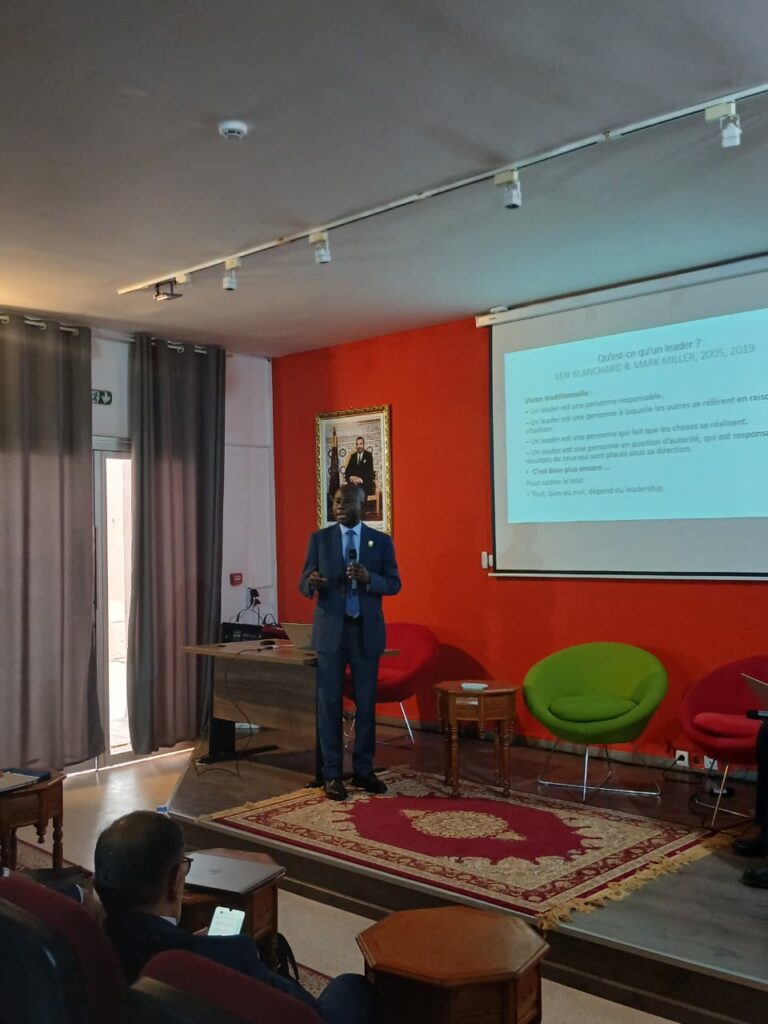
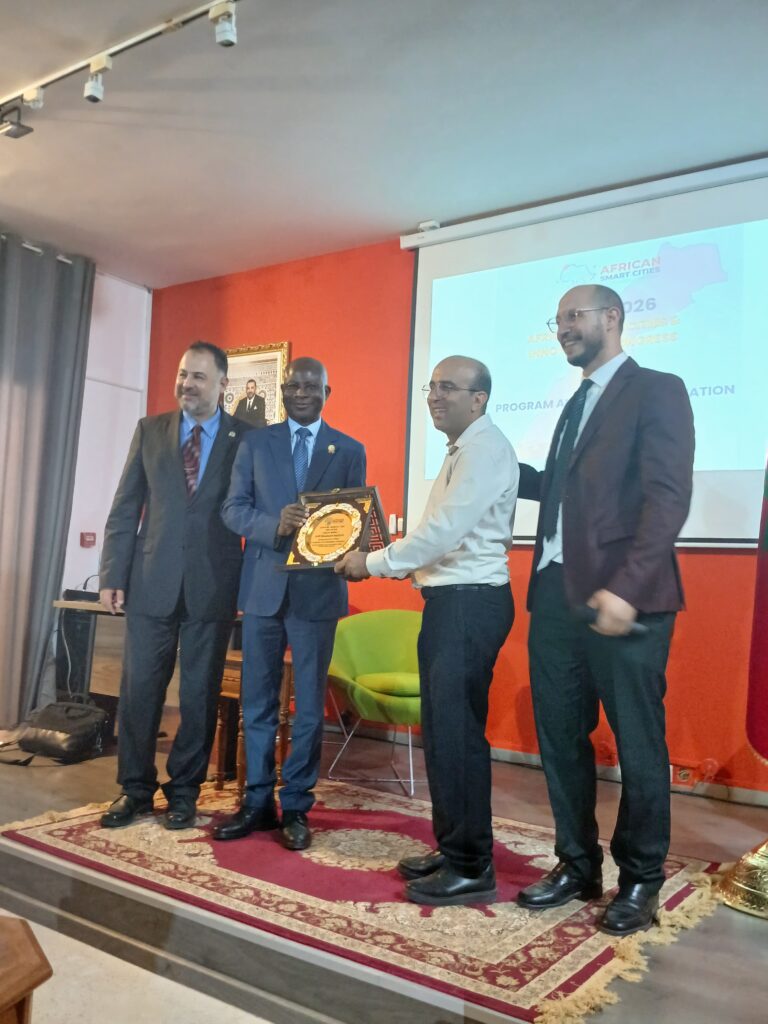
Laayoune, Morocco, October 28, 2026 – The Director-General of the African Training and Research Centre in Administration for Development (CAFRAD), Dr. Coffi Dieudonné ASSOUVI, participated in the first International Congress on Smart Cities and Innovation (ASCIC 2027), held in Laayoune, Kingdom of Morocco. There, he delivered a presentation on the theme: “Smart Digital Transformation: Digital Technologies in the Service of Sustainable Governance.”
This contribution is part of an international discourse on technological shifts, the modernization of public action, and new approaches to territorial governance—a context defined by the accelerating pace of digital transformation and the emergence of increasingly powerful technologies.
Digital transformation: A strategic lever for reinventing public governance
During his presentation, the Director-General of CAFRAD emphasized the importance of digital technologies in the evolution of governance models and the modernization of public administrations.
Digital transformation cannot be reduced merely to the introduction of technological tools into administrative structures. It also entails a profound evolution in working methods, decision-making processes, coordination mechanisms, and the relationships between public administrations and citizens.
In this light, digital technologies serve as essential levers for improving the efficiency of public services, strengthening transparency, facilitating access to information, and fostering an administration that is more focused on the needs of its citizens. Smart Cities in the Service of Sustainable Territorial Development
The concept of “smart cities” occupies a central place in new territorial development strategies. The intelligent use of data, integrated information systems, digital platforms, and innovative technological solutions open up new possibilities for managing territories and improving the quality of public services.
However, the success of this transformation relies on a coherent, inclusive, and sustainable governance framework—one capable of effectively linking technological innovation, territorial planning, human development, and the protection of resources.
The goal is to harness digital technology as a genuine tool for development, enabling local authorities and public institutions to anticipate challenges, optimize their resources, and provide responses tailored to the needs and expectations of the population.
Artificial Intelligence and Innovation at the Heart of Administrative Transformation
At a time when artificial intelligence and emerging technologies are redefining how institutions operate, public administrations must develop new capacities for adaptation, foresight, and innovation.
This evolution requires, among other things, strengthening human capital, modernizing institutional and regulatory frameworks, and adopting digital strategies that are well-aligned with specific economic, social, and territorial realities.
For African nations, this shift represents a significant opportunity to modernize their administrations, develop solutions suited to their national contexts, and bolster their capacity to lead their own transformation processes.
CAFRAD: A Pan-African Actor Committed to the Transformation of Public Administration
Through its participation in this international forum, CAFRAD reaffirms its commitment to modernizing public administration across Africa, strengthening institutional capacities, and promoting new governance approaches tailored to contemporary challenges. As a pan-African intergovernmental organization specializing in administrative training and research, CAFRAD places particular importance on supporting African states in their processes of digital transformation, institutional innovation, and skills development.
The participation of its Director-General in ASCIC 2027 reflects the Organization’s commitment to contributing to international discourse and promoting a vision of digital transformation in which technology remains at the service of humanity, public sector efficiency, and sustainable development.
For CAFRAD, building the administrations of tomorrow means combining technological innovation, institutional excellence, and human leadership, with the goal of making digital technology a true engine for Africa’s sustainable transformation.
Documents for download
CAFRAD Op-Ed by Bennani – Recommendation on AI
Address by the Director-General of CAFRAD at ASCIC