


International Day for the Eradication of Poverty: Taking Action for Inclusive and Sustainable Development
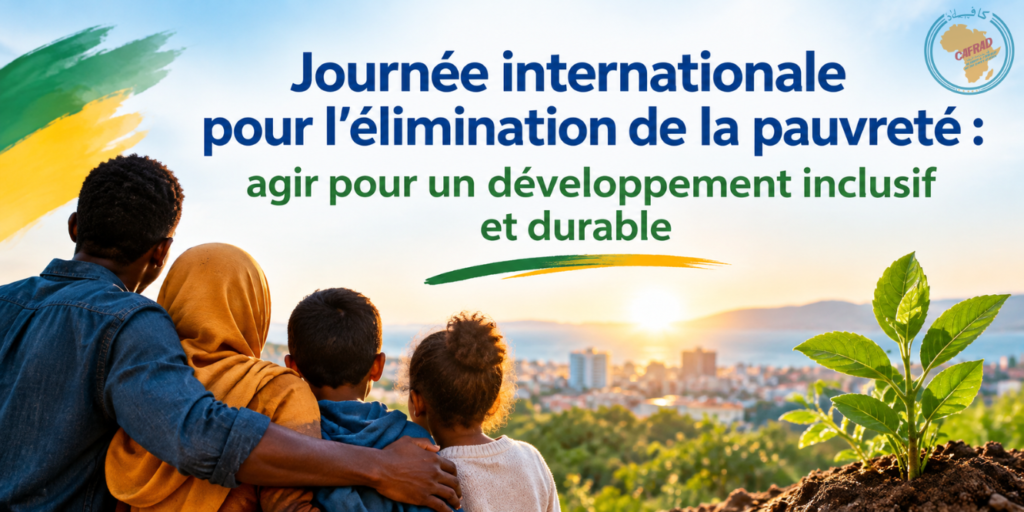
On the occasion of the International Day for the Eradication of Poverty, observed annually on October 17, the African Training and Research Centre in Administration for Development (CAFRAD) reaffirms the importance of inclusive, effective, and people-centered public policies in the sustained fight against poverty.
Eradicating poverty goes beyond merely increasing income. It also entails ensuring access to essential services, education, healthcare, decent employment, social protection, and economic opportunities. In this context, strengthening public institutions and improving the quality of public action serve as vital levers for reducing inequalities and fostering more equitable development.
CAFRAD highlights the multidimensional nature of poverty and calls upon all states to adopt a holistic and comprehensive approach to addressing it.
While the United Nations Sustainable Development Goals (SDGs) for 2030 designate the eradication of poverty as their first goal, it must be recognized that all 17 SDGs—if effectively implemented—contribute to the complete eradication of poverty globally, and particularly in Africa.
Strengthening Public Policies for the Benefit of the People
In Africa, the fight against poverty remains closely linked to the capacity of institutions to design and implement policies tailored to national and local realities. Effective governance—grounded in transparency, responsibility, participation, public integrity, equity, inclusion, and accountability—helps create the conditions necessary for sustainable development and greater social cohesion. Strengthening the competencies of public administrations, improving the management of public resources, and using reliable data to guide decision-making are all ways to better address the needs of the population—particularly those in vulnerable situations.
Investing in human capital
Investing in human capital is also a vital component of the fight against poverty. Access to quality education, skills development, and employment opportunities helps empower individuals, enabling them to participate fully in economic and social development.
In particular, women, young people, and vulnerable groups must be able to benefit from policies and programs that foster their participation in economic, social, and institutional life.
A collective responsibility
Eliminating poverty requires coordinated action among governments, public administrations, regional and international organizations, the private sector, civil society, and local communities.
Through its training, research, expertise, and support activities for African public administrations, CAFRAD helps strengthen the institutional and human capacities necessary for more effective, inclusive, and results-oriented public action.
On this International Day for the Eradication of Poverty, CAFRAD underscores the importance of placing human dignity, social inclusion, and equitable access to opportunities at the heart of public policies and development strategies.
CAFRAD: Strengthening public capacity to better combat poverty in Africa
In this context, CAFRAD plays a significant role by helping to strengthen the capacity of African public administrations and improve their performance. Through its programs in training, research, expertise, consulting, and knowledge exchange, the Centre supports member states in developing the institutional and human competencies needed to address contemporary challenges. By fostering a public administration that is more efficient, inclusive, transparent, and results-oriented, CAFRAD contributes indirectly to the design and implementation of public policies capable of reducing vulnerabilities, enhancing access to public services, and promoting more inclusive economic and social development. Its work is thus framed by the understanding that strengthening institutions and human capital serves as a vital lever for achieving a lasting reduction in poverty across Africa.